Kids cleaning tool materials are easy to overlook when two products appear similar in a catalog. A broom may combine a rigid body, a softer grip and nylon bristles, while a bathroom brush can use different materials for the holder, handle and working head.
For a B2B buyer, the material list is only the starting point. The finished product also needs to be checked for grip, bristle behavior, water contact, weight, surface finish, color consistency and ease of drying.
Packaging and private-label positioning may be affected as well.
No material is automatically the best choice for every component. What matters is whether it suits the part and the cleaning task.
“PP + TPR + nylon” becomes useful sourcing information only when the buyer knows where each material is used and what that component needs to do.
1. Kids Cleaning Tool Materials Should Match Each Component
Most cleaning tools are made from several materials because their parts do different jobs.
A broom can include a handle, head, grip, bristles, dustpan and decorative details. Listing all of that as “plastic and bristles” tells a buyer very little.
A more useful specification identifies both the material and its location.
PP Body
Provides the main molded form for components such as handles, holders and dustpans.
TPR Grip
Can provide a different surface feel from the harder structural plastic around it.
Nylon Bristles
Perform the actual sweeping action and should be evaluated on the intended light debris.
Ask which component uses each material and whether that part is structural, decorative or part of the working surface.
Note whether it contacts the floor or water and whether it affects handling. This allows two samples to be compared on more than appearance or a broad material description.
2. PP Is Used for Structural Cleaning-Tool Components
PP, or polypropylene, is used in many molded household cleaning components, including handles, holders and dustpans.
Its name on a specification sheet does not describe how the finished part will feel or perform, so the molded structure still needs a physical review.
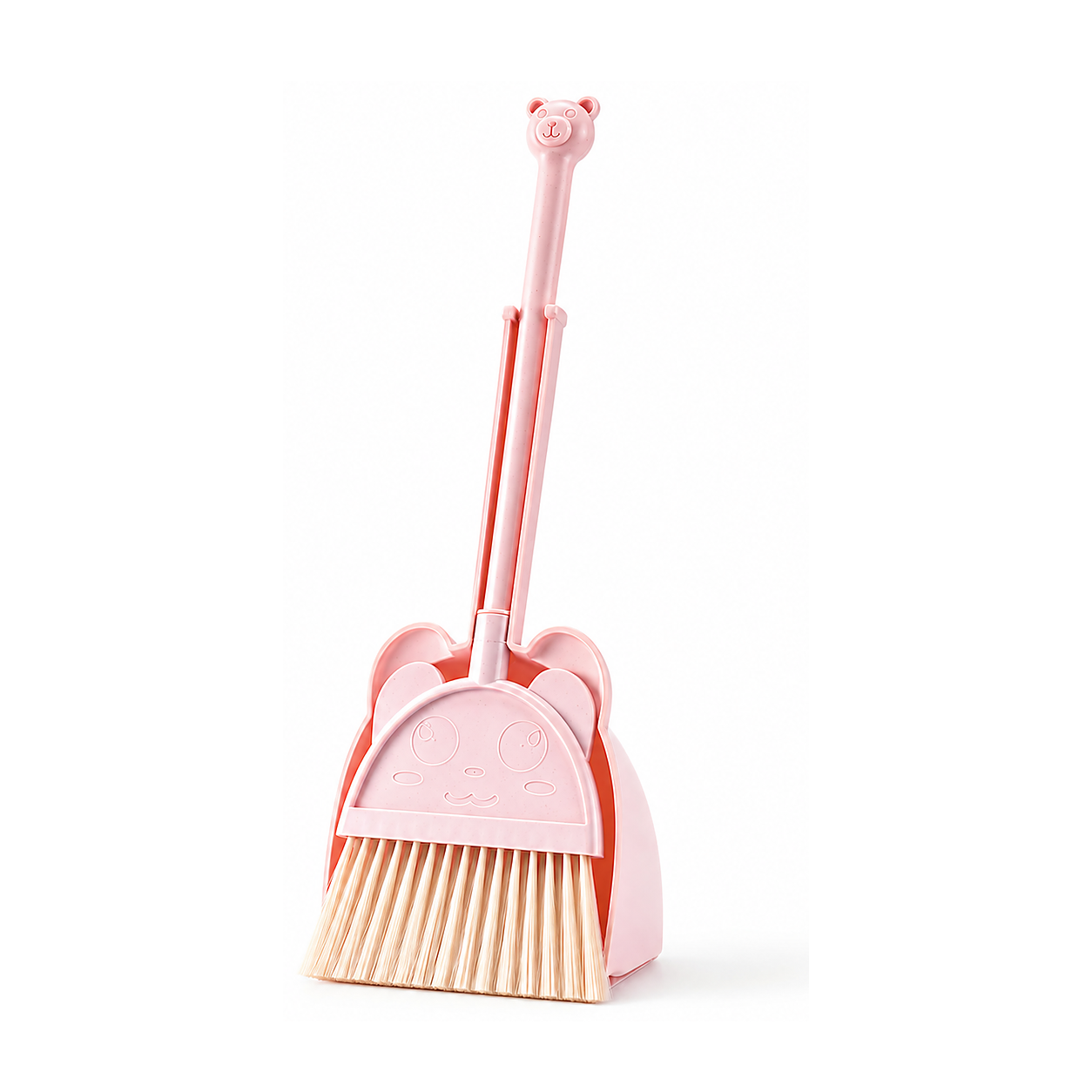
Kids Broom and Dustpan Set
The MAYEV Kids Broom and Dustpan Set uses PP together with TPR and nylon bristles.
The broom measures approximately 52 × 14 cm / 20.5 × 5.5 in and comes with a matching dustpan.
What to Check on the Sample
- Wall thickness
- Molded edges
- Handle stiffness
- Connection points
- Surface finish
- Color consistency
- Broom and dustpan fit
- Overall construction feel
Two products may both be described as PP and still feel quite different. Design, molding and finished construction matter alongside the material name.
3. Grip Materials Need a Separate Review
The handle is one of the first parts a user notices, yet buyers sometimes focus only on the main plastic body.
The MAYEV Kids Broom and Dustpan Set also uses TPR, which provides a different surface feel from the harder structural plastic around it.
Do not assume every TPR section will feel the same.
- Grip position
- Surface texture
- Grip thickness
- Join with harder plastic
- Movement or twisting
- Handle diameter
- Grip length
- Color relationship
These details are particularly relevant for child-sized tools because the grip area contributes directly to how the product feels in use.
A larger soft section is not automatically better if it makes the handle bulky or unbalanced.
For a private-label range, the TPR area may also become part of the color design. Contrasting or coordinated colors can be discussed, but the result should be confirmed during color development rather than inferred from a reference image.
4. Bristle Material Must Be Tested on the Intended Debris
Bristles perform the actual sweeping, so their behavior is one of the easiest material characteristics to test on a sample.
The MAYEV Kids Broom and Dustpan Set uses nylon bristles. Knowing the material is useful, but it does not answer the more practical sourcing question:
A simple sample test can use paper scraps, dry crumbs, light dust and other small household debris.
- Whether bristles bend too easily
- Whether they return to shape
- How debris moves toward the dustpan
- Gaps in the bristle arrangement
- Working width
- Overall sweeping feel
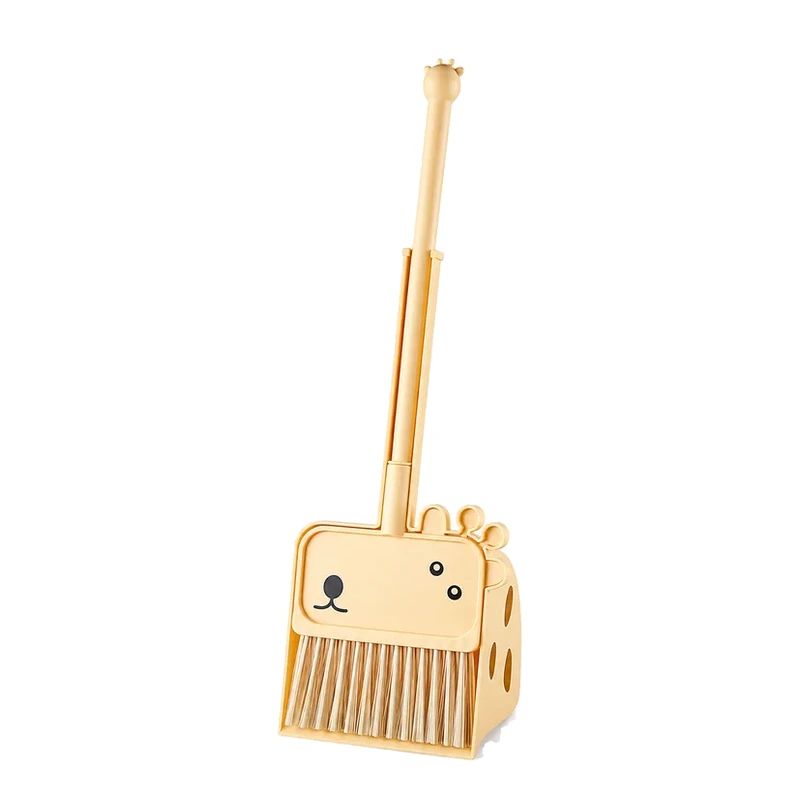
Kids Giraffe Broom
The MAYEV Kids Giraffe Broom has a different visual structure from the standard broom and dustpan set.
Buyers should still evaluate the sweeping section on the actual debris the product is expected to handle.
5. Wet-Cleaning Products Need a Different Material Review
A dry broom and a wet mop operate under different conditions. Once water is involved, buyers need to look beyond general surface quality.
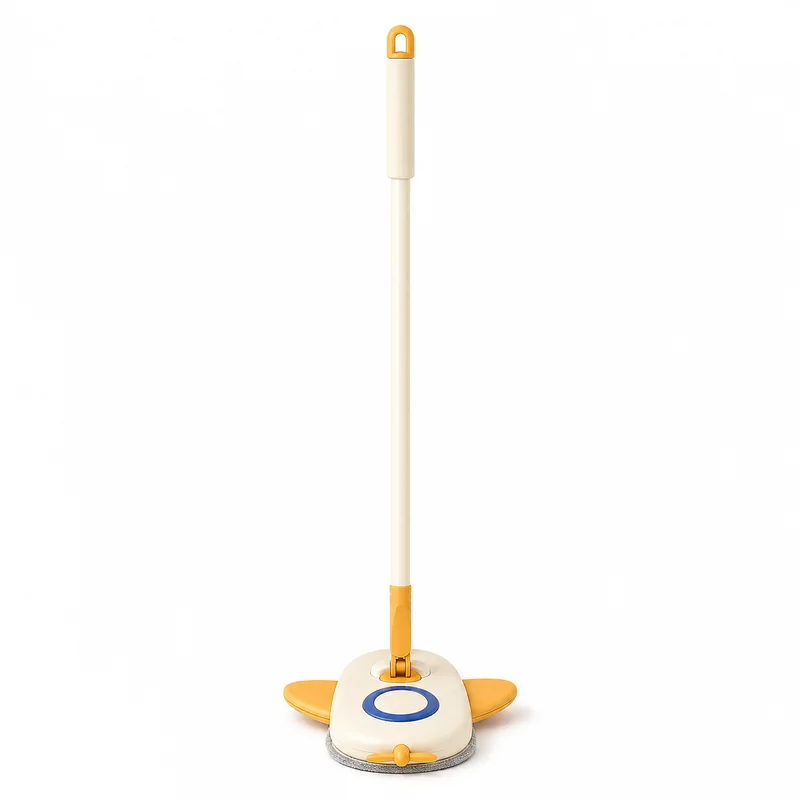
Kids Airplane Mop
The MAYEV Kids Airplane Mop uses a plastic main structure and is intended for light floor wiping with water.
Its listed dimensions are approximately 71 × 74 cm / 27.95 × 29.13 in.
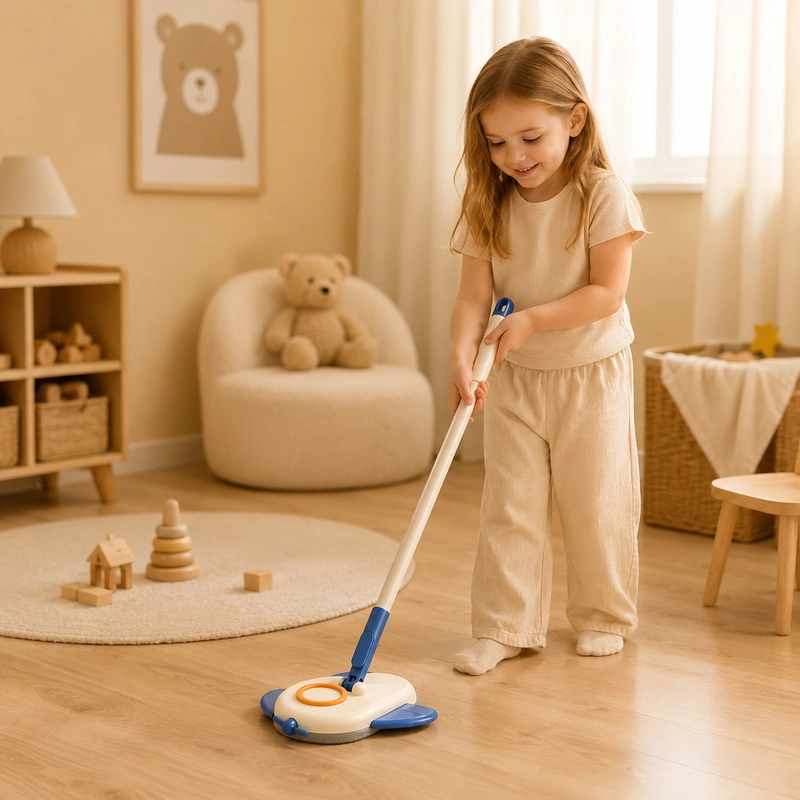
- Water-contact areas
- Nearby joints
- Connection points
- Handle movement
- Working-head structure
- Drying after use
- Damp storage conditions
- Surface finish after wet use
The working mop section should match the final approved configuration. If different head materials or structures are available, compare those options separately.
Changing molded plastic color is one type of customization. Changing a working material or structural component affects the product itself and calls for another assessment.
6. Bathroom Brushes Combine Structural and Working Materials
A toilet brush shows clearly why a product should not be evaluated as one plastic item.
The holder and handle provide structure, while the brush head performs the cleaning work.
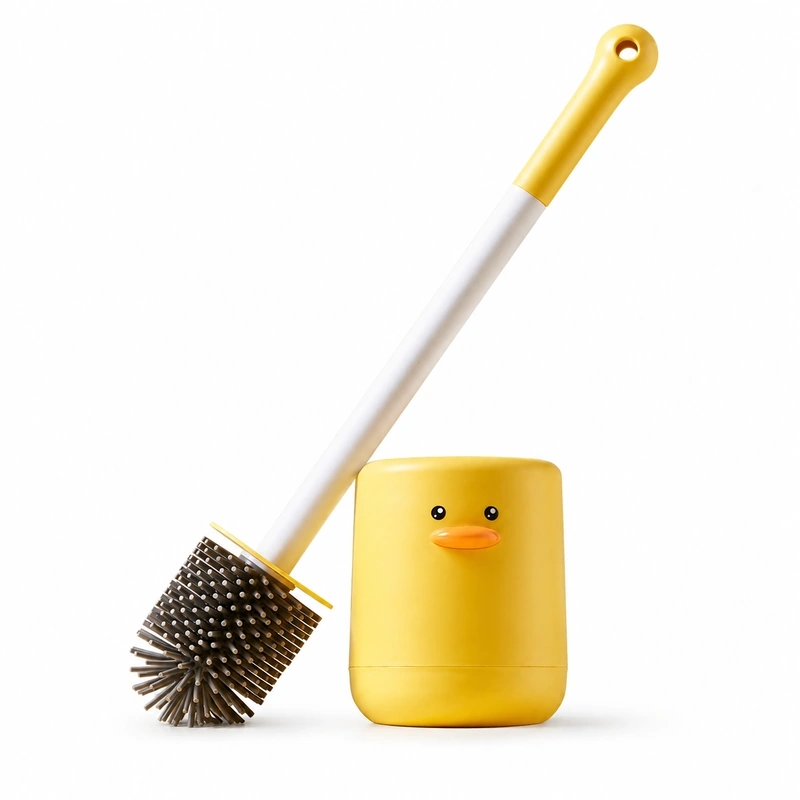
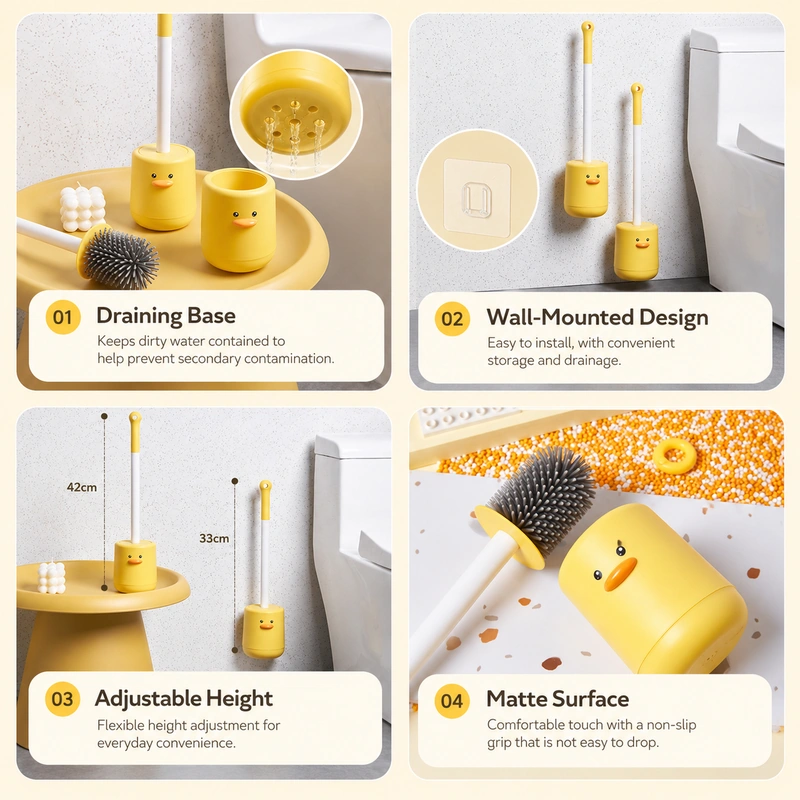
The MAYEV Yellow Duck Toilet Brush uses a PP holder, PP handle and TPR brush head. Nylon bristles can also be discussed for custom orders.
Its approximate size is 10 × 10 × 51 cm / 3.94 × 3.94 × 20.08 in.
Check Structure
Review stability, opening size, molded shape, surface finish and color consistency.
Check Handling
Review length, stiffness, grip feel and connection with the working head.
Check Contact
Review flexibility, working shape, cleaning contact and attachment structure where applicable.
Breaking the review into components also makes customization discussions clearer.
A buyer may approve the yellow duck holder but ask about another brush-head configuration. That is a product-development question rather than a simple color change.
7. Character Design Should Not Distract From Construction Quality
Animal faces, airplane shapes and bright colors tend to dominate the first impression of a kids cleaning product.
Buyers still need to examine the molding, joints and working components behind the design.
- Part alignment
- Surface finish
- Product balance
- Visible connections
- Clean color boundaries
- Molded facial details
- Security of decorative pieces
- Effect on grip or storage
The Kids Giraffe Broom, Kids Airplane Mop and Yellow Duck Toilet Brush use character styling in different ways.
Extra molded sections may also affect packaging volume. For a private-label brand, customers are likely to judge visible molding and assembly as part of the overall brand experience.
A playful design still needs tidy execution.
8. Kids Cleaning Tool Materials Can Affect Color Development
Custom color requests often involve more than selecting one reference code.
A product may combine rigid PP, softer TPR, nylon bristles and another working material. Their surfaces can reflect light differently, so the same target color may not look identical across every component.
Physical color samples or production references can be useful when developing:
- Pastel ranges
- Neutral collections
- Matching broom-and-mop programs
- Character collections
- Retail-exclusive colors
- Coordinated private-label ranges
A color displayed on a monitor can provide direction, but it cannot confirm the final molded appearance.
Buyers should also decide whether every component needs to look as close as possible or whether a coordinated contrast is acceptable.
A slightly different grip or bristle color may be intentional. The important point is to agree on the direction before production.
9. Confirm Kids Cleaning Tool Materials Before Production
For private-label orders, confirm the material specification against the approved sample and final product configuration.
- Product model and dimensions
- Main structural material
- Grip material
- Bristle material
- Working-head material
- Water-contact components
- Handle construction
- Connection points
- Finished product weight
- Selected colors
- Surface finish
- Character or decorative parts
- Packaging method
- Intended cleaning task
- Destination market
- Requested customization
Review the sample as a complete cleaning tool rather than as a collection of material names.
MAYEV can discuss existing product materials, logo application, colors, graphics, character styling, packaging and selected product changes according to the model and project.
Any change to a working component, material or structure should be confirmed before production.
Final MOQ, customization feasibility, packaging, production details and lead time depend on the selected product and order requirements.
Buyers can explore MAYEV products or contact MAYEV with the selected model and project requirements.
Kids Cleaning Tool Materials: B2B Sourcing Summary
Kids cleaning tool materials should be reviewed according to the job of each component, not by material name alone. PP can form structural parts, TPR may be used for a softer grip or working section, and nylon bristles can provide the sweeping surface. Wet-cleaning tools also need a review of water-contact areas, joints, drying and storage. Before production, B2B buyers should confirm the finished structure, working materials, colors and requested changes against the approved product.
Frequently Asked Questions About Kids Cleaning Tool Materials
What materials are commonly used in kids cleaning tools?
The answer depends on the product. MAYEV models may use PP, TPR, nylon bristles and other plastic components. Confirm the exact material specification for the selected model.
Why do cleaning tools use more than one material?
Their components perform different jobs. A rigid plastic may form the handle or holder, a softer material may be used for grip or cleaning contact, and bristles perform the sweeping action.
Are nylon bristles suitable for a kids broom?
Nylon bristles can be used in a functional broom. Buyers should assess the actual sample for stiffness, recovery, arrangement and performance on the intended light debris rather than relying on the material name alone.
Do wet-cleaning tools need different material checks?
Yes. In addition to general construction quality, review water-contact areas, joints, working-head structure, drying method and damp-storage conditions.
Can different materials use the same custom color?
A coordinated color can be developed, but different materials and surface textures may not look completely identical. Physical samples or production references are useful when close color consistency matters.
Can MAYEV customize materials for private-label cleaning products?
Some material, color and structural changes can be discussed according to the selected model and project. A working-material change is different from a color change, so feasibility should be confirmed before production.
Review the Material in the Context of the Whole Product
A useful material specification explains what each component is made from, what that component needs to do and how the finished sample performs.
Discuss Your Private-Label Project