Quick answer: Toilet brush quality control should start before a bulk order enters production.
For B2B buyers, the best reference is the complete product. Holder stability, handle connections, brush-head construction, surface finish, mounting parts and packaging all need to work together.
Toilet brush quality control should start before a bulk order enters production.
For B2B buyers, the best reference is the complete product. Holder stability, handle connections, brush-head construction, surface finish, mounting parts and packaging all need to work together. Checking materials or components in isolation will not show how the finished set feels or whether it matches the intended retail position.
An approved sample is more than a visual reference. It records what the buyer expects the production order to match, provided that any later changes to color, accessories, labels or packaging are added to the final approval record.
MAYEV manufactures toilet brushes and bathroom cleaning tools in China. Specifications, colors, packaging, OEM requirements and other order details can be reviewed according to the selected product and project requirements.
Buyer note: Quality control is not only about finding visible defects. It also helps confirm that the production order matches the assembled product, packaging and final configuration approved before bulk production.
Table of Contents
1. Check the Complete Assembled Product First
A toilet brush may use acceptable individual components and still feel wrong once everything is assembled. That is why the first inspection should cover the full set rather than the handle, holder or brush head on its own.
Place the brush in the holder and look at the overall proportions. Check the handle position, the way the brush head sits inside the holder and whether the components touch where they should not. Remove the brush and return it several times. The movement should feel natural for the intended design.
This first check often reveals issues that are easy to miss in product photos. A long handle, for example, may suit the design visually but make the set feel unstable when paired with a narrow base. A brush head may fit the holder but sit off-center or catch against the opening.
Buyer takeaway: Record the assembled appearance as part of the sample approval. It gives both buyer and supplier a clearer reference for the final retail item.
2. Test Holder Stability
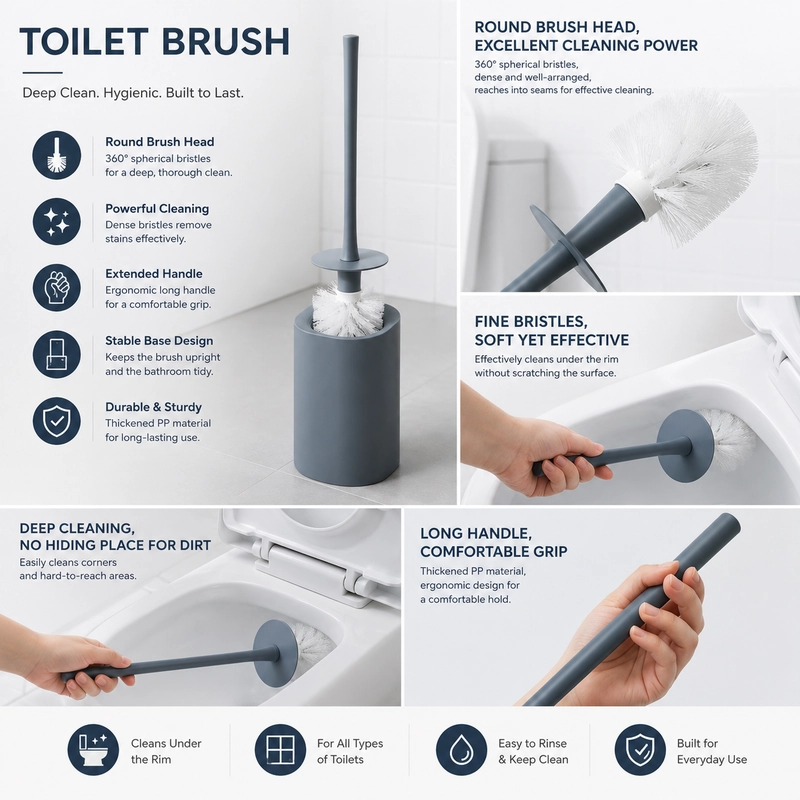
For a freestanding toilet brush, holder stability deserves its own test. A brush that cleans normally can still create a poor user experience if the complete set tips too easily.
Put the product on a flat surface. Insert and remove the brush, move the handle lightly, then return it from more than one angle. Watch the base during each movement rather than judging stability only while the set is untouched.
Base width, total product height, brush-head position and material distribution can all affect the result. This does not mean every model needs a heavy or oversized holder. A compact design can still feel appropriate when its proportions are well resolved.
The useful benchmark is the approved product concept. Buyers should decide whether the set feels stable enough for its intended design and use, then make that expectation clear before bulk production.
3. Review the Handle and Its Connection Points
Toilet brush handles come in several constructions. A model may use a one-piece plastic handle, threaded sections, multiple plastic parts, a stainless-steel section, a hanging loop or a splash guard. Each additional joint creates another point to inspect.
Connection Check
Check whether connected sections tighten securely and sit in alignment. Threaded parts should not leave the handle visibly crooked after normal assembly.
Balance Check
Handle length changes the appearance and leverage of the product. Hold and move the fully assembled brush rather than assessing the handle by itself.
Where metal meets plastic, inspect the joint closely and compare it with the approved sample.
If the product ships unassembled, the packaging and instructions should support the same final result. The production item should not depend on excessive force or guesswork to reach the approved configuration.
4. Inspect the Brush Head and Bristles
The brush head is one of the main working areas in toilet brush quality control. Review its shape, symmetry, attachment to the handle and the distribution of the bristles.
Look for visible gaps and uneven areas. On a traditional round-head model, rotate the brush and inspect it from several angles. A front-facing photo may hide an irregular section at the side or back.
Bristle density should be compared with the approved specification and sample. The same applies to curved, compact or other head structures. There is no single shape or density that suits every toilet brush; the goal is consistency with the selected model and intended design.
Also check the connection between the head and handle. If the product uses a threaded or replaceable arrangement, assemble it as an end user would and confirm that it sits correctly when tightened.
5. Check Materials Together with the Product Design
A material name does not determine the quality of a finished toilet brush. Bathroom cleaning tools may combine PP components, plastic holders, PP bristles, stainless-steel handles or mixed plastic-and-metal structures. The way those materials are formed and joined matters just as much as the list itself.
For molded plastic parts, inspect:
- Surface appearance
- Edges
- Shape consistency
- Visible molding marks
- Fit between components
- Color consistency
On mixed-material models, pay close attention to the point where metal and plastic meet. The joint should match the approved construction and should not introduce obvious misalignment or an unfinished appearance.
The purpose of the inspection is not to rank one material above another in every situation. It is to confirm that the chosen material and construction support the product’s intended position, appearance and use.
6. Review Wall-Mounting Parts Separately
Wall-mounted and dual-use toilet brushes add another group of components to the inspection. The brush and holder may pass review while the mounting system does not match the approved configuration.
Lay out every included part before testing the set. Depending on the model, this may include a wall bracket, adhesive component, holder connection, installation accessories and instructions. Confirm both the quantity and the exact configuration.
Fit the holder to the bracket and check how the parts connect. If the design allows the holder to be removed for cleaning or used as a freestanding item, test that movement as well.
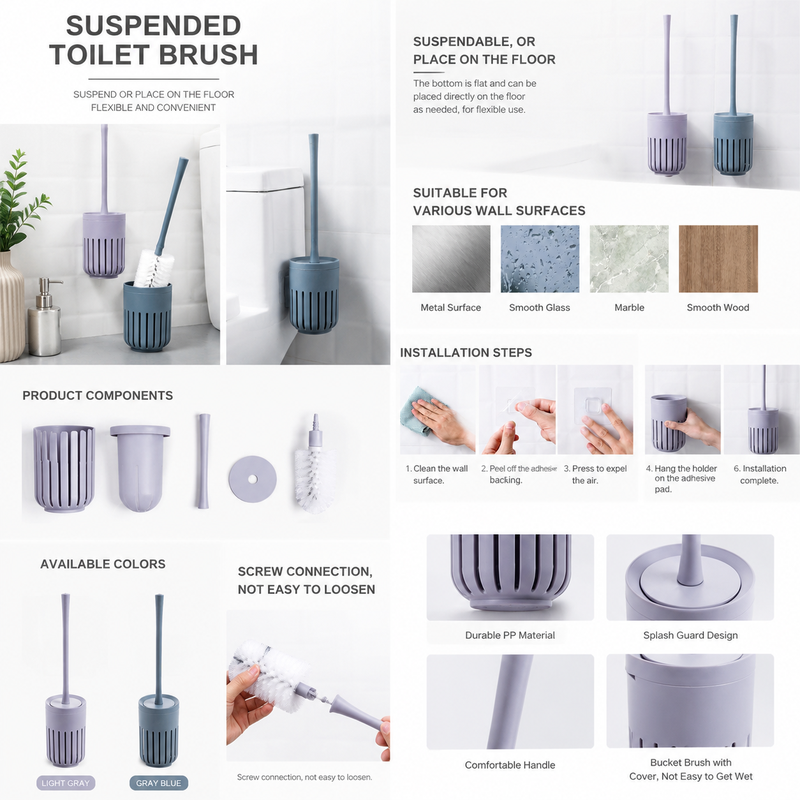
Mounting note: Adhesive performance can vary with wall condition, texture, cleanliness, moisture, finish and installation method. One adhesive system should not be assumed to perform identically on every bathroom surface.
For more sourcing context, see MAYEV’s Wall-Mounted vs Freestanding Toilet Brush comparison.
7. Compare Color, Surface Finish and Visible Details
Cosmetic differences become easier to see when several units are displayed together. A single sample may look acceptable on its own, yet variations in gloss, color or alignment can stand out across a retail shelf.
During toilet brush sample inspection, compare the color and surface texture of all visible parts. Check edges, part alignment, molding marks and decorative details under consistent lighting.
This is especially important on products that combine several molded plastic components. If the holder, handle and splash guard are intended to follow one color direction, identify the approved reference clearly before production.
Decorative models need the same discipline. A paw-shaped or otherwise distinctive toilet brush relies more heavily on appearance for its retail position, so visible molding and assembly details carry more weight. The decorative feature should look clean without interfering with the product’s normal function.
8. Include Packaging in the Quality Check
Product inspection should continue into the retail pack. The finished set still has to reach the buyer’s warehouse or store in the approved configuration.
Check where the brush and holder sit inside the package and whether they can move against one another. Review any protection placed between parts, especially on products with stainless-steel handles or visible decorative surfaces. Small mounting accessories need a defined location so they are not overlooked or lost inside the pack.
Retail Pack
Review labels, instructions, barcode space, color identification and the exact product variant inside the pack.
Outer Carton
Handle length, holder shape, accessory count and packaging structure can all affect outer-carton planning.
A package developed for one toilet brush may not work for another model.
Packaging note: Packaging options and workable MOQ can be discussed according to the selected product, order quantity, requested customization and project needs.
9. Define the Approved Configuration Before Bulk Production
One of the most effective quality-control steps happens before the production line starts. Buyer and supplier need a shared record of the final approved configuration.
That record may cover:
- Product model
- Materials
- Color
- Handle
- Brush head
- Holder
- Mounting parts
- Logo
- Labels
- Instructions
- Packaging
- Included accessories
Private-label projects often change after the first sample. A buyer may approve the product, then revise the color, artwork, mounting accessory or retail pack. Those revisions become part of the final product and should be confirmed rather than treated as separate administrative details.
A physical sample, specification sheet, packaging artwork and purchase-order details each serve a different purpose. Keep them aligned and identify which version is current. An early sample should not remain the sole reference after the project has changed.
Toilet Brush Quality Control Checklist
Before confirming a bulk toilet brush order, review:
- Complete assembled appearance
- Holder stability
- Handle alignment and connections
- Brush-head construction
- Bristle distribution
- Material appearance
- Plastic surface finish
- Color consistency
- Component fit
- Wall-mounting parts where applicable
- Included accessories
- Packaging fit and internal protection
- Labels and barcode information
- Instructions
- Logo or private-label requirements
- Final approved product configuration
Not every order needs the same inspection plan. The checklist should follow the selected model, level of customization and final order requirements.
Common Toilet Brush Quality Control Mistakes
Relying on Product Photos Alone
Photos help confirm appearance, but they cannot fully show balance, holder stability, component fit or the physical surface finish. Use them with a sample and confirmed specification.
Approving Components Separately
The handle, holder and brush head may each look acceptable while the assembled set feels different from what the buyer expected. Always complete a full-product review.
Leaving Packaging Until the End
Packaging is part of the delivered configuration. Review it before production reaches its final stage, particularly when the product includes a long handle, metal parts or mounting accessories.
Treating an Early Sample as Permanent
If the color, label, accessory or packaging changes after sample approval, update the final configuration and confirm the revision.
Looking Only for Visible Defects
Quality control also covers assembly, stability, component fit, included parts and whether the production order matches the approved product.
How MAYEV Supports Toilet Brush Sourcing Projects
MAYEV manufactures toilet brushes and bathroom cleaning tools in China for importers, wholesalers, distributors, retailers and household product companies.
Available products include freestanding, wall-mounted, ventilated, decorative, plastic and mixed-material toilet brush formats. Project discussions can cover product selection, materials, colors, OEM requirements, packaging and order configuration.
For buyers still planning their assortment, the MAYEV Toilet Brush Wholesale guide provides a broader overview.
For buyers preparing products for retail, see the Retail-Ready Toilet Brush Buyer Checklist.
Frequently Asked Questions
What should B2B buyers check during toilet brush quality control?
Review the assembled product, holder stability, handle connections, brush-head construction, bristles, materials, surface finish, color, mounting components, packaging and final approved configuration.
Why is a toilet brush sample important before bulk production?
A physical sample lets the buyer inspect construction, dimensions, balance, materials, finish, component fit and overall appearance before the production configuration is finalized.
Should packaging be included in toilet brush inspection?
Yes. Packaging affects product protection, movement between components, accessory placement, labels, instructions and the final retail presentation.
What should buyers check on a wall-mounted toilet brush?
In addition to the brush and holder, review the bracket, mounting components, holder-to-bracket connection, included accessories and installation information.
Does every toilet brush project use the same quality-control checklist?
No. Inspection points depend on the selected model, materials, storage format, customization, packaging and order requirements.
When should private-label details be confirmed?
Colors, logo, labels, packaging, instructions and other private-label details should be included in the final approved configuration before bulk production details are finalized.
Sourcing Toilet Brushes for a Bulk Order?
MAYEV manufactures toilet brushes and bathroom cleaning tools in China for B2B buyers.
Product selection, materials, colors, packaging, OEM requirements and other order details can be discussed according to the target market and project requirements.
Packaging options and workable MOQ can be reviewed according to the selected product, quantity and requested customization.