Kids cleaning chores make more sense when buyers start with the job that needs doing rather than the shape or color of the product. Sweeping, collecting debris, light mopping and bathroom cleaning all require different tools, product structures and levels of guidance.
1. Kids Cleaning Chores Start With the Task, Not the Product
Children’s cleaning ranges are often planned from the outside in. One broom is pink, another looks like a giraffe, the mop resembles an airplane, and the toilet brush has a duck-shaped holder.
Those details affect merchandising, but they do not explain what the products can actually do.
A more practical way to plan kids cleaning chores is to group the range by activity:
- Dry sweeping
- Collecting crumbs, dust and paper scraps
- Light wet floor cleaning
- Bathroom cleaning
- General participation in household routines
- Character-led household products
Once the activity is defined, a buyer can assess handle length, working surface, materials, water contact, storage and guidance requirements. It also becomes easier to write an accurate product listing because every item has a clear job.
A stronger cleaning assortment covers different household jobs instead of relying only on new colors or cartoon shapes.
2. Sweeping Chores Need a Functional Broom and Dustpan
Sweeping is a straightforward place to begin, provided the broom can actually collect light debris.
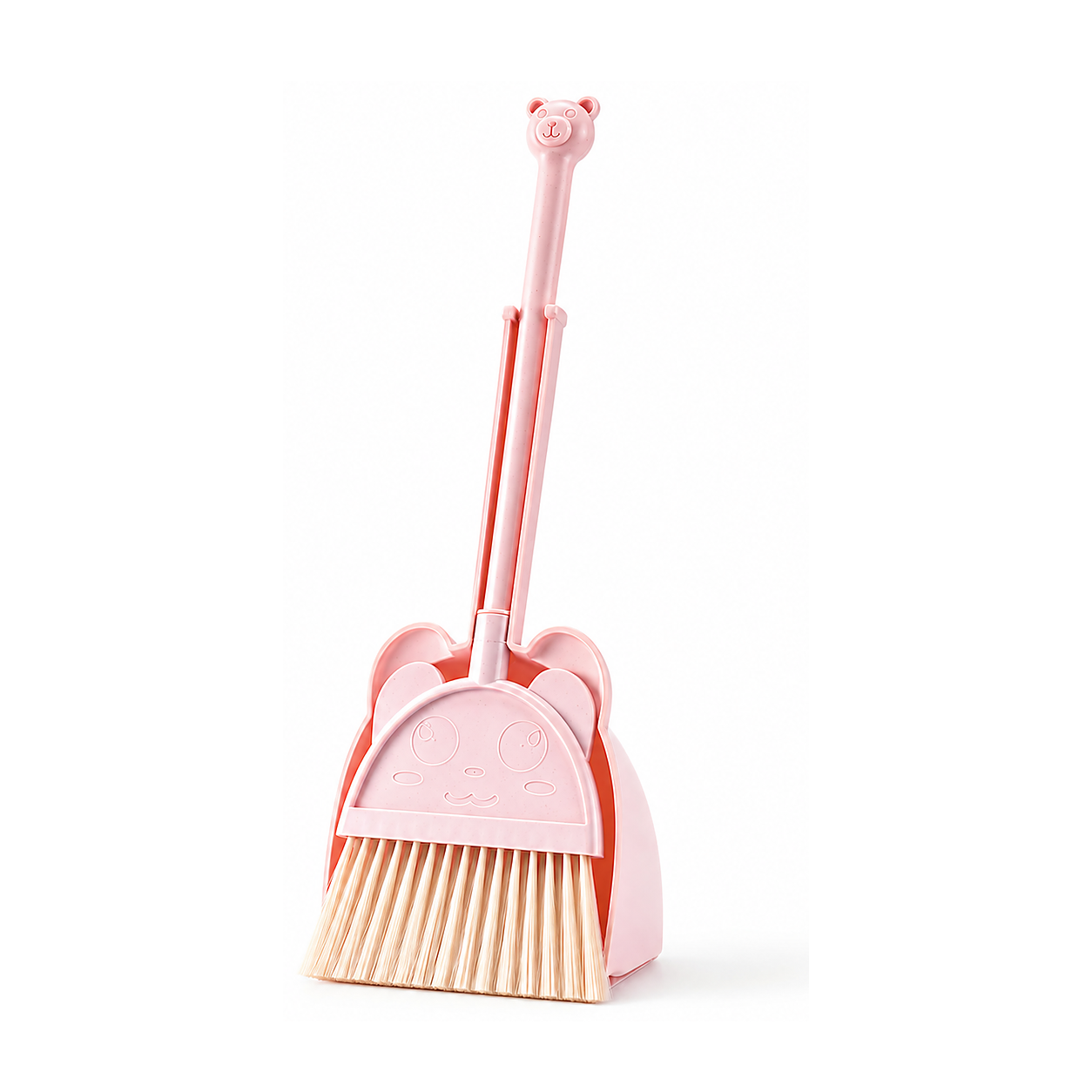
Kids Broom and Dustpan Set
The MAYEV Kids Broom and Dustpan Set uses PP, TPR and nylon bristles. The broom measures approximately 52 × 14 cm / 20.5 × 5.5 in and comes with a matching dustpan.
It can move crumbs, paper scraps, dust and similar household debris rather than simply imitating the motion of sweeping.
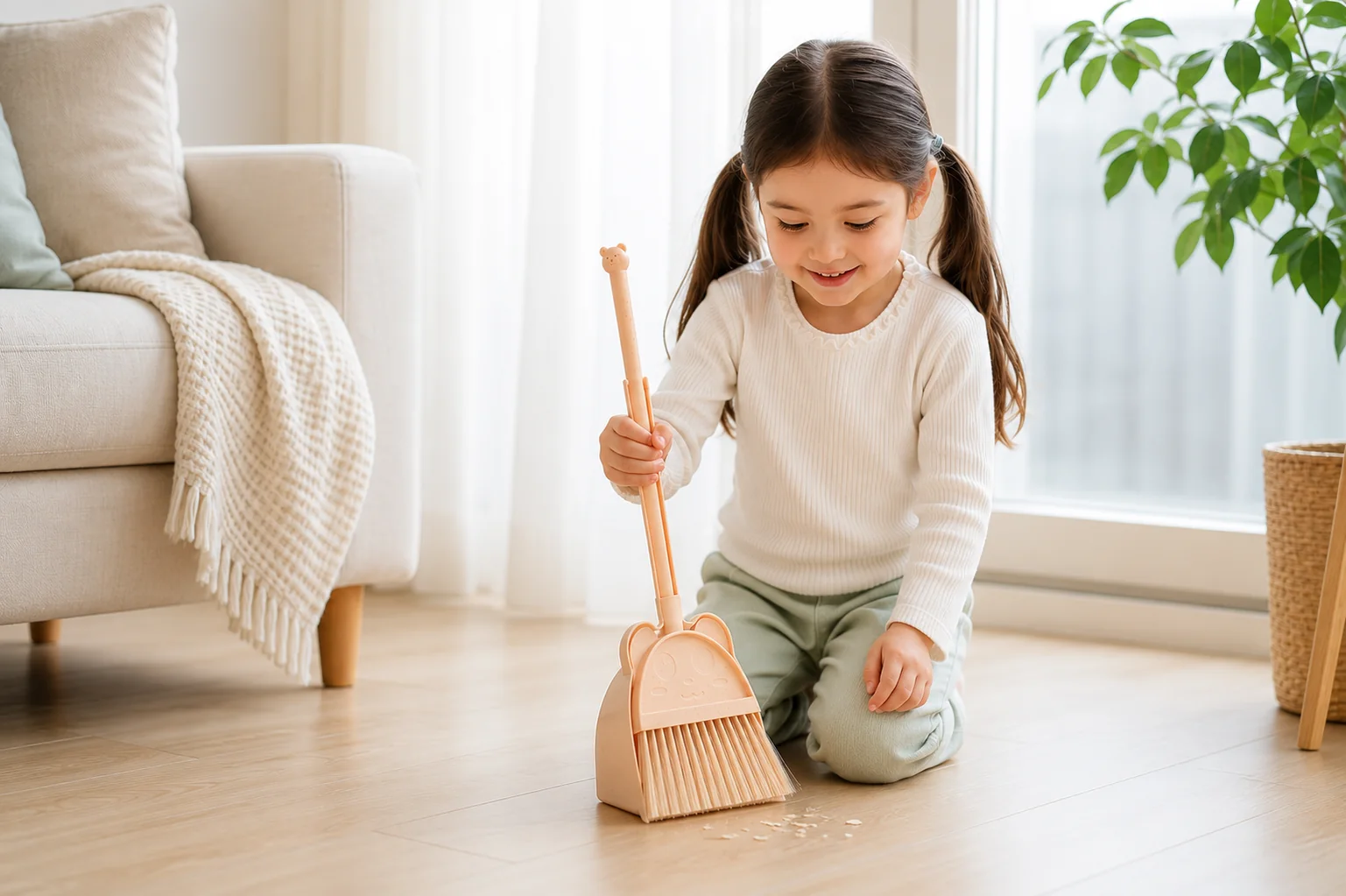
Children can use the set during home or preschool routines, while adults may find the compact size useful for corners and small messes.
The product can fit Montessori and preschool suppliers, supermarkets, household goods stores, toy and activity retailers, online sellers and private-label brands.
During sample review, buyers should test the bristles on the kind of debris named in the product listing. Check the broom width, handle proportions, dustpan edge and how well the two pieces work together before focusing on graphics or packaging.
3. The Same Chore Can Have a Different Retail Position
Products can perform the same basic job and still belong in different parts of a range. The Kids Giraffe Broom is a good example.
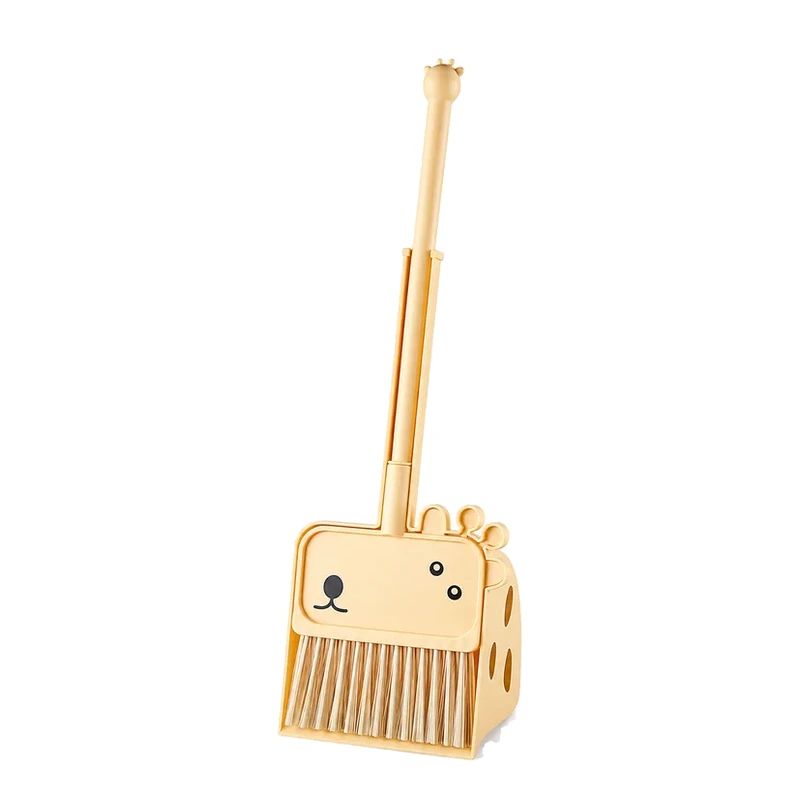
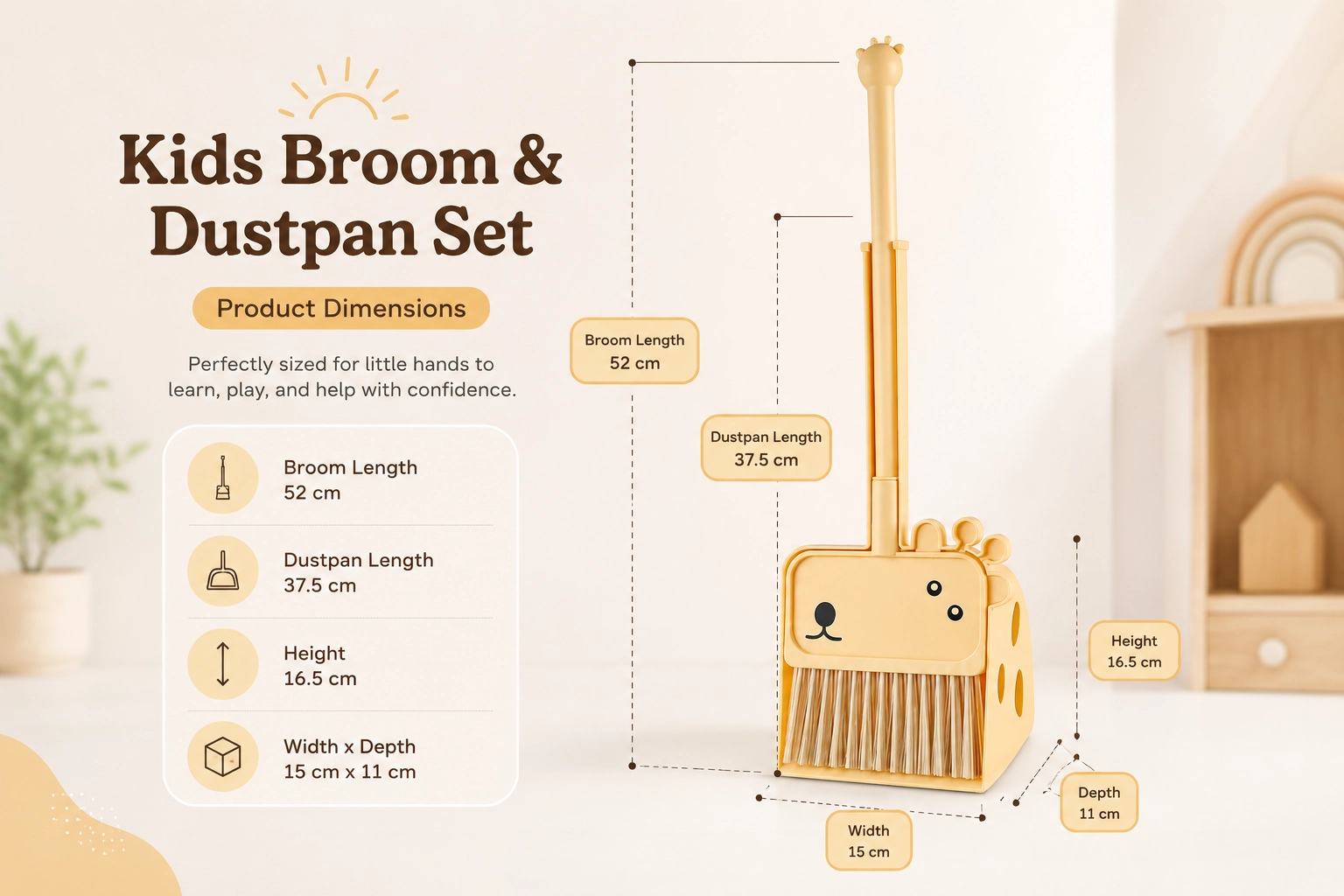
The Kids Giraffe Broom is a working broom and dustpan set that can move dust, paper scraps and other light debris. Its giraffe-inspired shape changes the retail presentation, not the underlying task.
The product measures approximately 11 × 15 × 52 cm / 4.3 × 5.9 × 20.5 in. Its character styling may suit a children’s section, toy aisle, gift range or themed Montessori collection where visual recognition carries more weight.
For a buyer choosing between this model and a simpler broom set, cleaning performance may be similar. The deciding factor is often the sales channel.
A practical-looking set can sit comfortably in household and practical-life ranges. The giraffe version gives toy, gift and character-led programs a clearer merchandising story.
4. Mopping Adds a Different Type of Kids Cleaning Chore
A second broom gives the customer another design choice. A mop adds another cleaning activity.
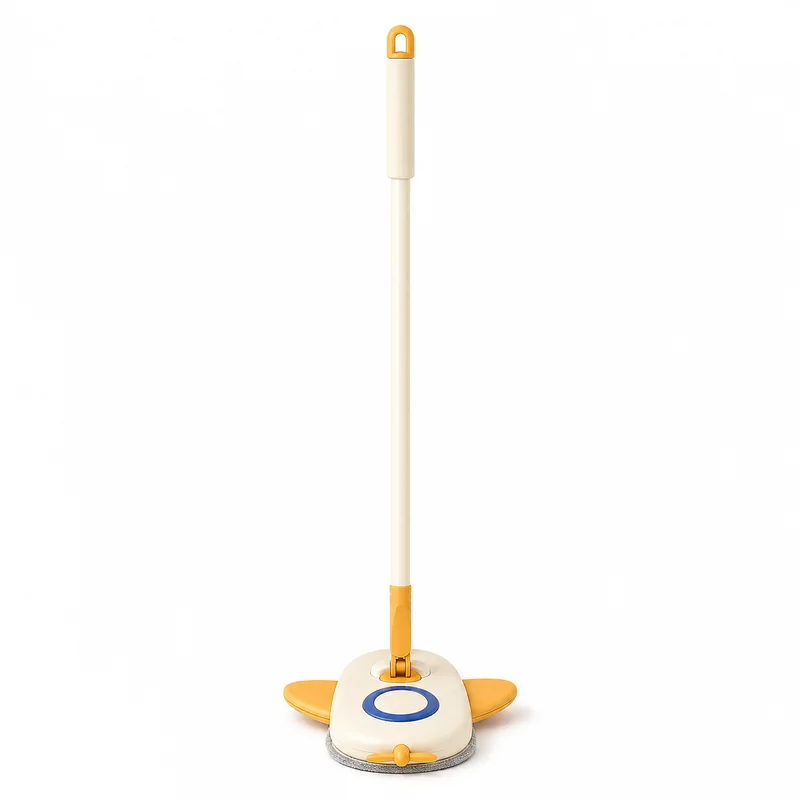
Kids Airplane Mop
The MAYEV Kids Airplane Mop moves the range from dry sweeping into light wet cleaning.
It can be used with water to wipe a lightly soiled floor.
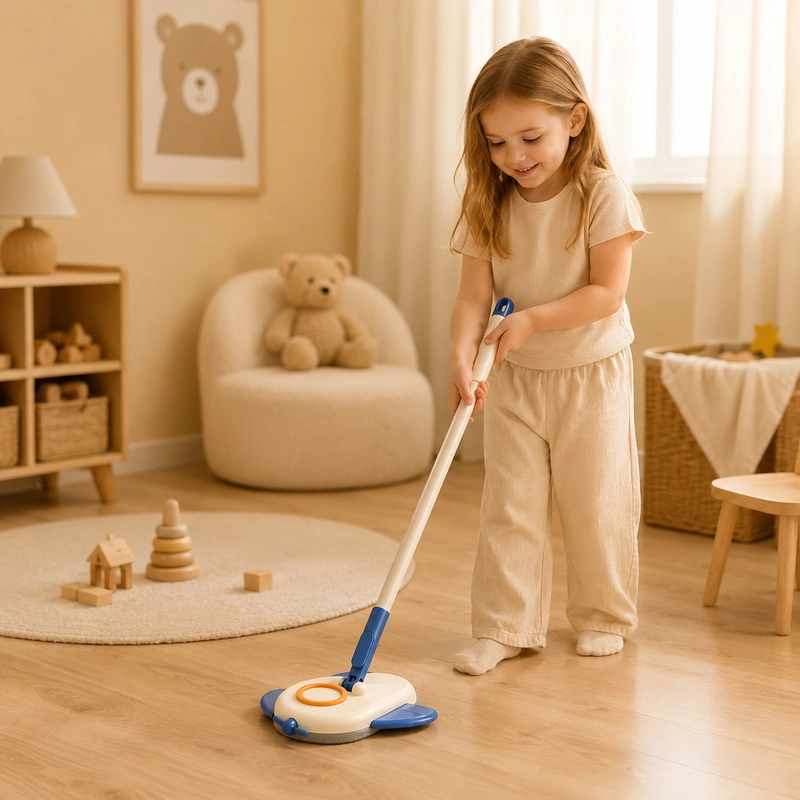
The airplane shape makes the product easy to recognize, but the buying questions are different from those for a broom.
- How the materials handle water
- Mop-head construction and attachment
- Handle movement and control
- Drying and storage after use
- Stability on the intended floor surface
- Guidance needed during use
Water on a floor can create a slipping risk, so adult guidance is recommended for wet-cleaning activities.
This is where task variety matters. Three broom designs still cover one chore. A broom, dustpan and mop combination covers both dry debris and light floor wiping, creating a more useful kids cleaning chores assortment.
5. Bathroom Cleaning Belongs to a Different Level of Household Chore
For older children, age-appropriate household participation may eventually include bathroom work. This category needs more careful positioning than sweeping or picking up paper scraps.
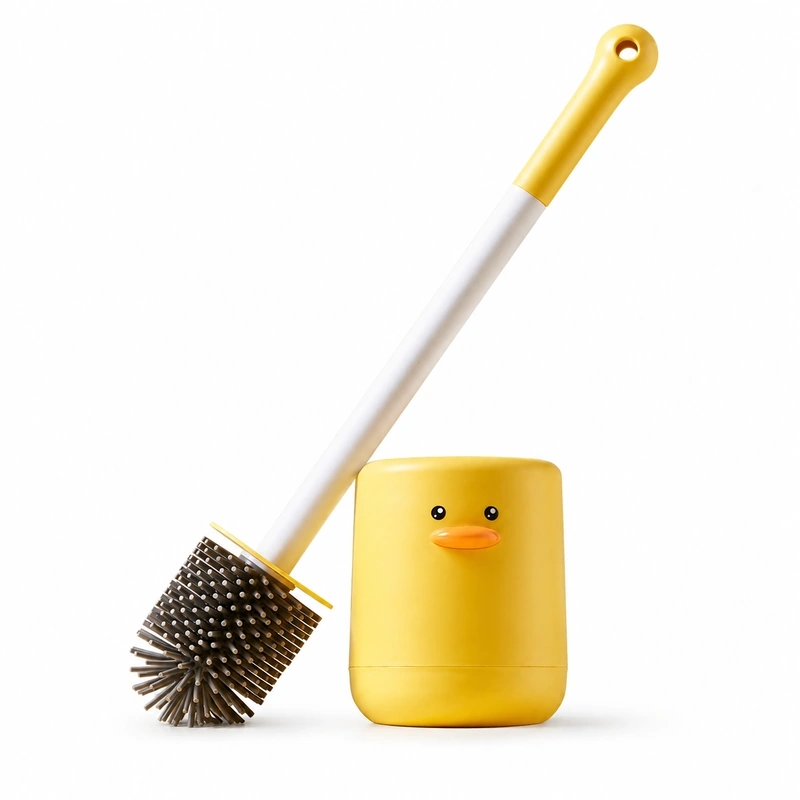
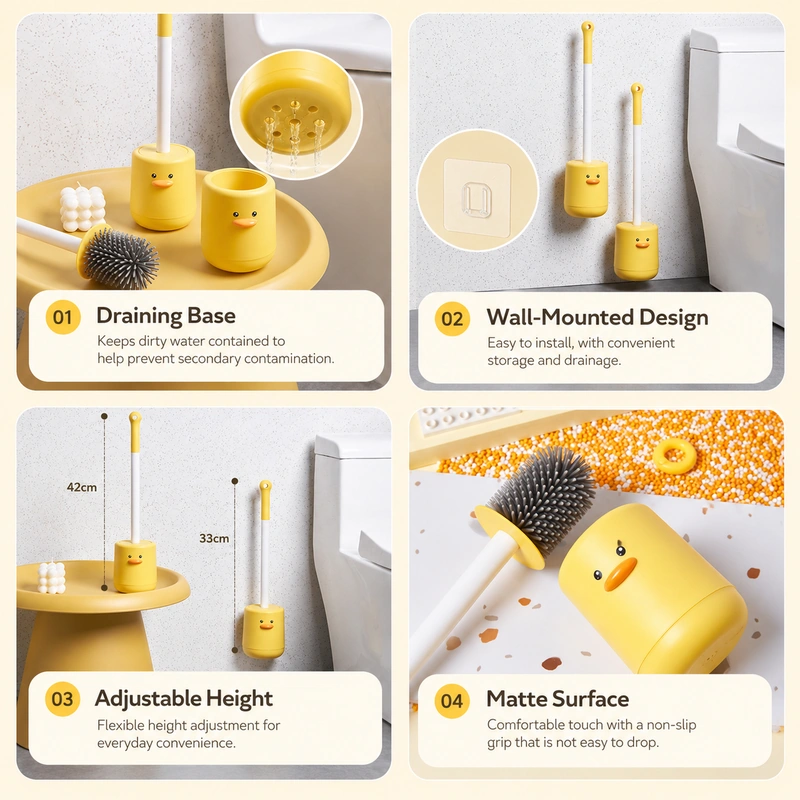
The MAYEV Yellow Duck Toilet Brush is a functional bathroom cleaning product, not a pretend-play brush. It has a PP holder and handle with a TPR brush head. Nylon bristles can also be discussed for custom orders.
The product measures approximately 10 × 10 × 51 cm / 3.94 × 3.94 × 20.08 in.
The duck-shaped holder gives the item a friendlier appearance, but its purpose remains toilet cleaning. For B2B buyers, it offers a family-oriented design direction without moving the product into the toy category.
HealthyChildren, a resource from the American Academy of Pediatrics, lists scrubbing toilets and cleaning bathrooms among possible chores for children around ages 11 to 12.
That does not make every bathroom task suitable for every child, and it does not remove the need for adult judgment.
Cleaning tools and chemicals should also be treated separately. CDC household cleaning guidance advises users to follow product labels and store cleaning and disinfecting products safely.
6. Match the Cleaning Tool to the Chore
Product comparisons become clearer when every item is tied to a specific task.
Sweeping
Suitable tool: Broom
Check bristle performance, working width, handle proportions and durability.
Collecting Debris
Suitable tool: Dustpan
Check broom fit, edge contact with the floor and ease of handling.
Light Floor Mopping
Suitable tool: Mop
Check water contact, mop construction, handle movement, drying and use guidance.
Bathroom Cleaning
Suitable tool: Toilet brush
Check brush-head structure, holder design, intended age, supervision and cleaning-agent use.
This task-first structure gives sales teams more useful language. Instead of applying vague terms such as “fun,” “educational” or “Montessori” to every item, the listing can state what the product is made to do.
Human buyers understand the distinction immediately, while search and AI systems receive clearer product context.
7. Different Sales Channels Need Different Product Mixes
A complete range does not need every available tool. It needs the right combination for the channel.
Montessori and Preschool Suppliers
A practical broom and dustpan is a sensible starting point. These buyers may place more value on manageable proportions and completion of a real task than on elaborate character styling. A mop can add another supervised practical-life activity.
Supermarkets and Household Stores
Broader household usefulness matters here. A compact broom can support children’s participation and help adults clean a small area. Character-shaped bathroom products can sit with regular homeware instead of being restricted to a toy department.
Toy and Gift Retailers
Visual identity carries more weight in these channels. A giraffe broom or airplane mop is easier to build into a themed display than a neutral cleaning tool. The product description should still explain the real function plainly.
Online and Private-Label Sellers
Online images should show dimensions, construction, included parts and actual use. The listing should make clear whether the item sweeps, mops, supports role play or handles another household task.
8. Build a Kids Cleaning Chores Range Around Real Use
A simple range can be built in stages.
These four products create distinct commercial positions without pretending that every model performs a completely different job.
The two broom sets share a task but suit different visual strategies. The mop adds wet cleaning. The toilet brush extends the assortment into age-appropriate bathroom chores.
That is more useful than adding extra colors or characters to one product type and calling the result a complete assortment.
9. What B2B Buyers Should Confirm Before a Private-Label Project
Before requesting a quotation, define the household task and intended sales channel.
- Product model and cleaning activity
- Intended user
- Expected quantity
- Required dimensions
- Dry or wet use
- Preferred colors
- Logo and graphic requirements
- Cartoon or character direction
- Packaging format
- Destination market
- Labeling requirements
- Product assortment plan
MAYEV can discuss logo application, colors, brand graphics, printed patterns, cartoon styling, packaging and selected product details according to the model and project.
MOQ, customization feasibility, packaging, production details and lead time should be confirmed against the selected product, quantity and order requirements.
Buyers can also explore MAYEV cleaning products before deciding which models to include in a sourcing brief.
Kids Cleaning Chores: B2B Sourcing Summary
Kids cleaning chores may include dry sweeping, collecting light debris, wet floor cleaning and age-appropriate bathroom work. Each activity calls for a different product structure and level of guidance. B2B buyers should start with the household task, then compare dimensions, materials, character styling, sales channel, packaging and private-label requirements.
Frequently Asked Questions About Kids Cleaning Chores
What household tasks can kids cleaning tools be used for?
Depending on the product, they can support sweeping, collecting crumbs or paper scraps, light floor mopping and other age-appropriate household routines. Confirm the intended task and guidance for each model.
What is the difference between a kids broom and a kids mop?
A broom handles dry debris such as crumbs, dust and paper scraps. A mop introduces water and floor wiping, so buyers also need to review mop construction, movement, drying, storage and supervision.
Can children use cleaning tools for real household chores?
Some child-sized tools can perform light household tasks. Suitability depends on the activity, product construction, intended user and how the tool will be used. Wet cleaning and bathroom work may need closer adult guidance.
Can a toilet brush be included in a kids cleaning chores range?
A character-shaped toilet brush may fit a broader family chore range for age-appropriate users. It should remain clearly identified as a functional bathroom cleaning product rather than a toy.
How should B2B buyers choose products for different cleaning tasks?
Start by deciding whether the product will sweep, collect debris, mop or handle another household job. Then compare dimensions, materials, usability, guidance, packaging and channel fit.
Can MAYEV customize a kids cleaning product range?
Logo application, colors, brand graphics, patterns, cartoon styling and packaging can be discussed. Available options depend on the model, quantity, manufacturing feasibility and order requirements.
Build a Kids Cleaning Range Around Real Tasks
A useful assortment starts with the household job. Product shape, color and character design can then support the right retail position.
Discuss Your B2B Project