Kids cleaning product design often begins with a familiar idea: take an ordinary household tool and make it more appealing to children. A broom becomes a giraffe, a mop takes on an airplane theme, and a toilet brush holder becomes a yellow duck. The visual change is easy to see. The commercial effect takes more thought.
A character shape can help a product stand out in a children’s aisle or give an online listing a recognizable main image. It may also provide a starting point for a private-label collection.
None of that removes the need for a working product. The giraffe broom still needs to sweep, the airplane mop must move across the floor, and the duck-shaped toilet brush remains bathroom cleaning equipment.
For importers, distributors, retailers and private-label brands, the design brief therefore needs to cover both the cleaning task and the intended retail position.
1. Kids Cleaning Product Design Should Start With Function
A character concept is much easier to develop when the working structure has already been settled.
An animal face may make a broom easier to notice, but buyers still need to inspect the bristles, handle proportions and dustpan fit. On a mop, the floor head, movement and response to water matter more during use than the decorative section above them.
Children’s cleaning products are especially easy to judge by appearance because product pages tend to lead with visual features.
- Animal faces and character shapes
- Bright or coordinated colors
- Rounded forms
- Themed handles
- Cartoon graphics
- Distinctive packaging artwork
These details help presentation. They say much less about the product’s ability to complete a household task.
Confirm what the product needs to clean, whether the working components can perform that task, and whether the decorative structure interferes with normal use.
Buyers should also review storage and packaging volume. A character shape that looks attractive in a rendering may create unnecessary carton volume or make the tool awkward to store.
2. The Same Cleaning Task Can Support Different Retail Positions
Character styling does not have to introduce a new cleaning function. Sometimes its main value is commercial: it gives buyers another way to present a familiar product.
The MAYEV Kids Broom and Dustpan Set and Kids Giraffe Broom show how this works. Both are intended for sweeping light household debris, but they suit different retail settings.
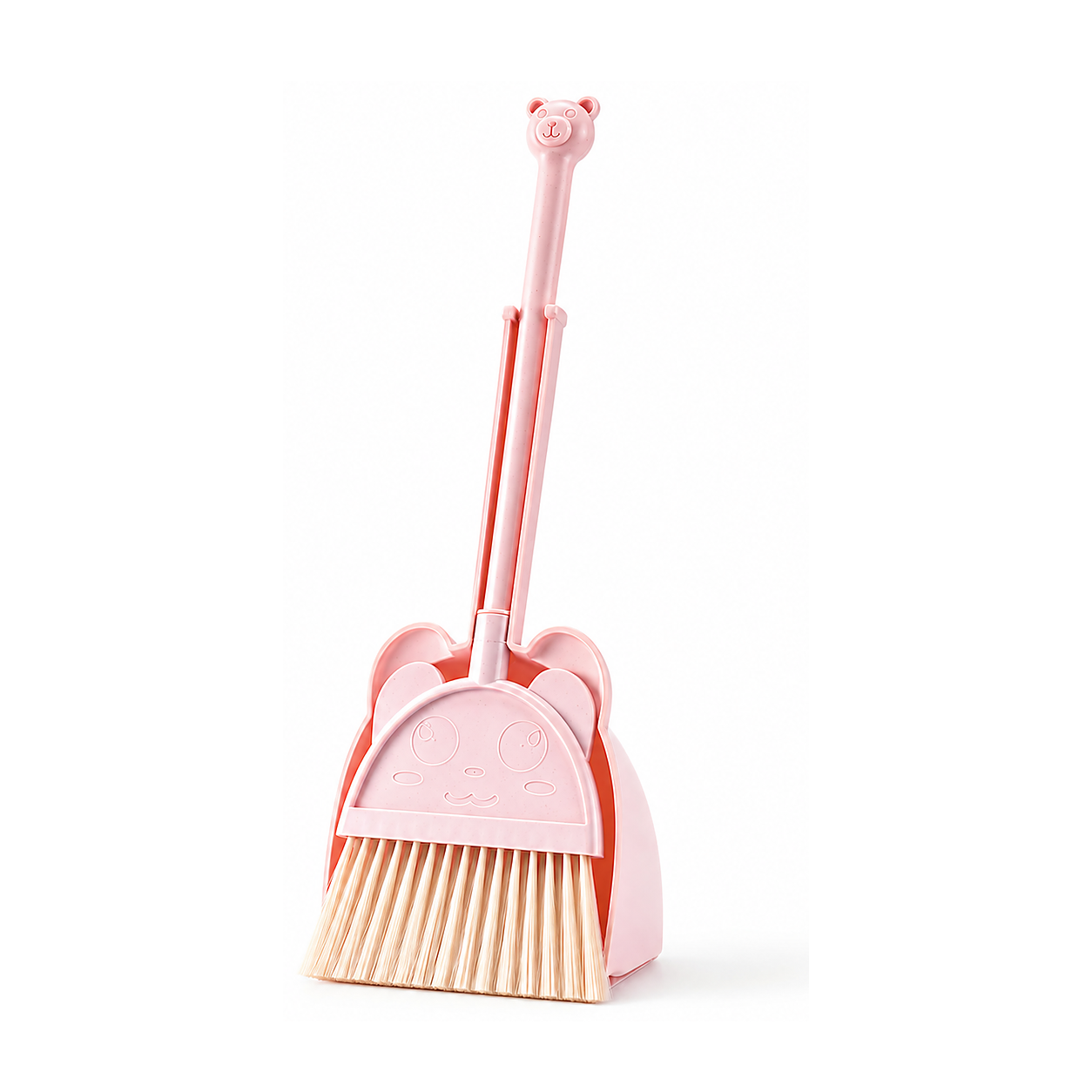
Practical Broom and Dustpan Set
The Kids Broom and Dustpan Set has a straightforward functional appearance.
Its main selling point is sweeping performance, making it suitable for Montessori and preschool ranges, supermarkets, household stores, online retail and private-label cleaning collections.
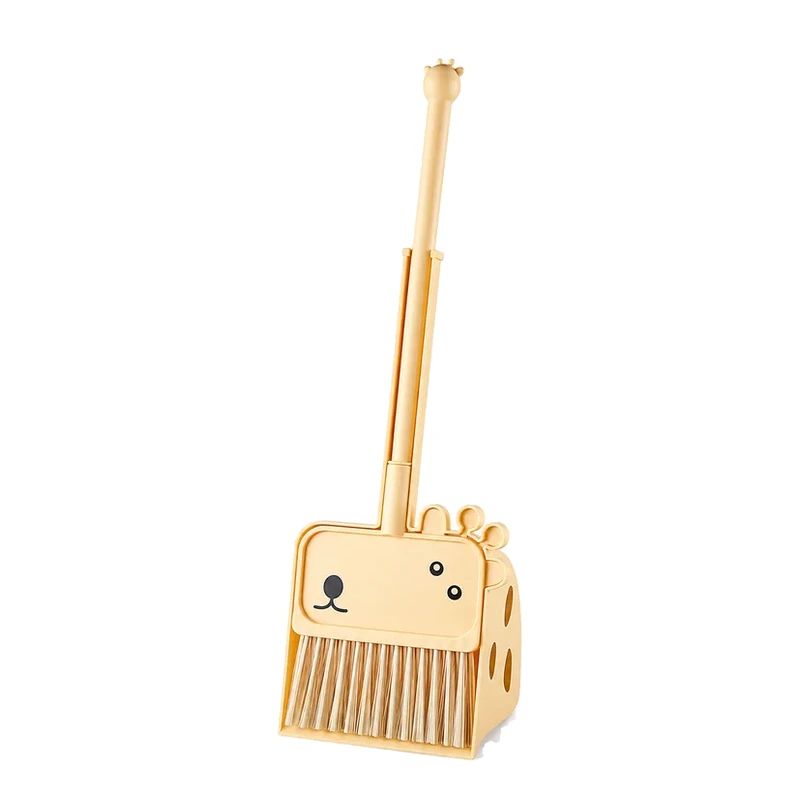
Character-Led Giraffe Broom
The Kids Giraffe Broom performs a similar sweeping task but has a more recognizable silhouette.
Its giraffe-inspired shape may be easier to place in children’s sections, toy and gift channels, themed displays and online listings where visual differentiation matters.
The giraffe version does not need to claim a different cleaning use. It gives the same household task a different shelf and online position.
This is one practical use of kids cleaning product design: two functional products can serve different buyers because their visual treatment is different.
3. Match the Character Concept to the Cleaning Task
A character theme works best when it follows the shape and movement of the product.
The MAYEV Kids Airplane Mop is a useful example. A mop already has a long vertical handle and a floor head that moves across the surface. An airplane-inspired section can be incorporated into that layout without changing the basic mopping action.
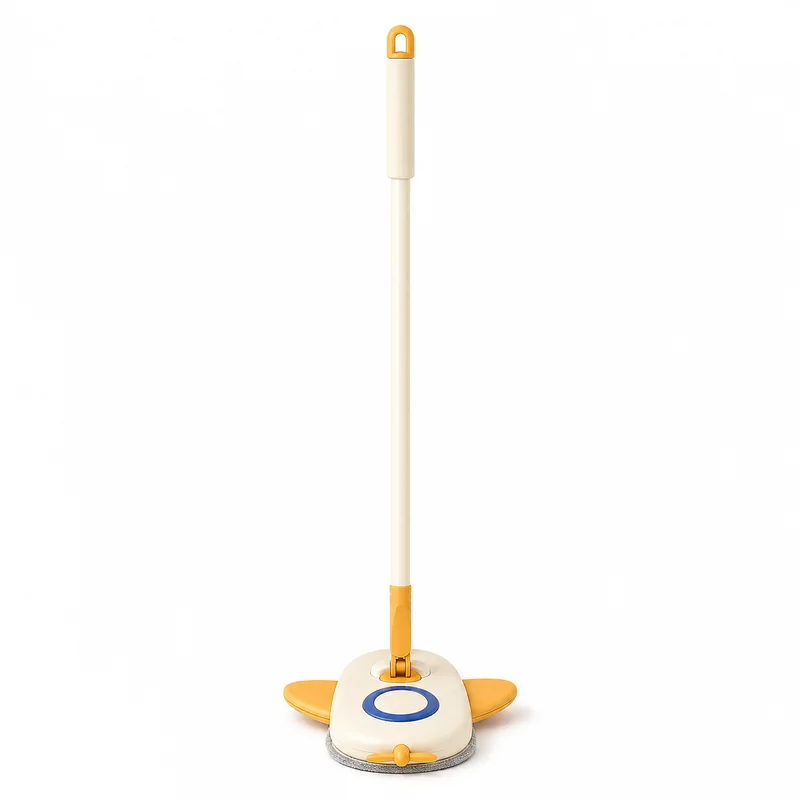
Kids Airplane Mop
The Kids Airplane Mop remains suitable for light floor wiping with water while the themed shape separates it from a conventional household mop.
The design gives retailers a clearer children’s product identity without changing the basic cleaning activity.
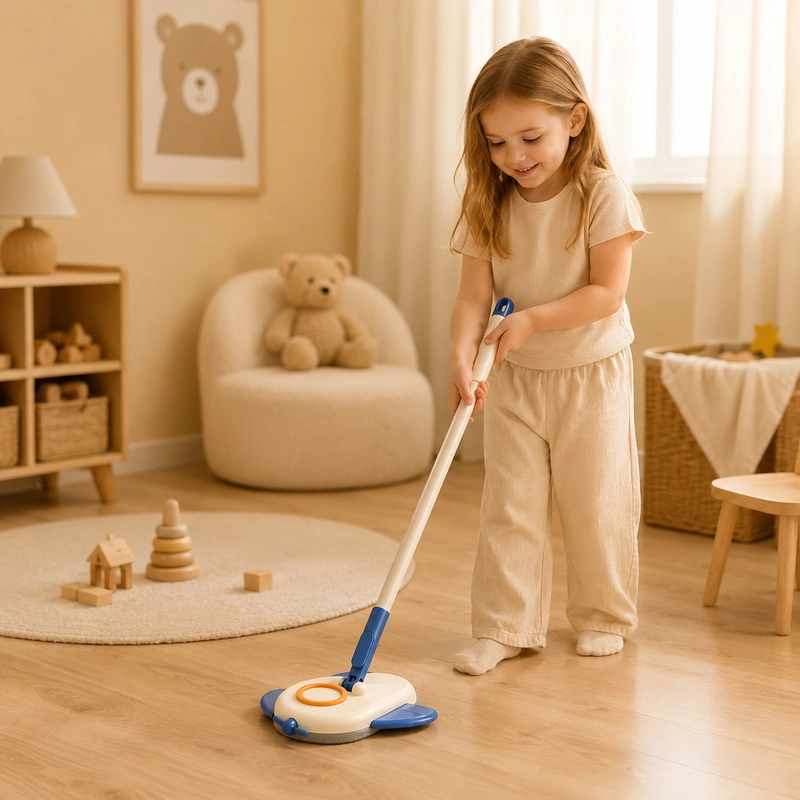
For retailers and private-label brands, this type of design can provide clear recognition in online images, room for coordinated colors and a theme that can continue into packaging artwork.
The visual idea still needs to survive a practical sample check.
- Handle movement
- Working-head dimensions
- Water contact
- Product balance
- Storage
- Drying after use
If the airplane section limits movement, makes the product awkward to store or complicates drying, the design needs another pass. The character should fit around the use of the mop.
4. Character Design Can Also Work Outside the Toy Category
A playful shape does not determine the product category. Intended use does.
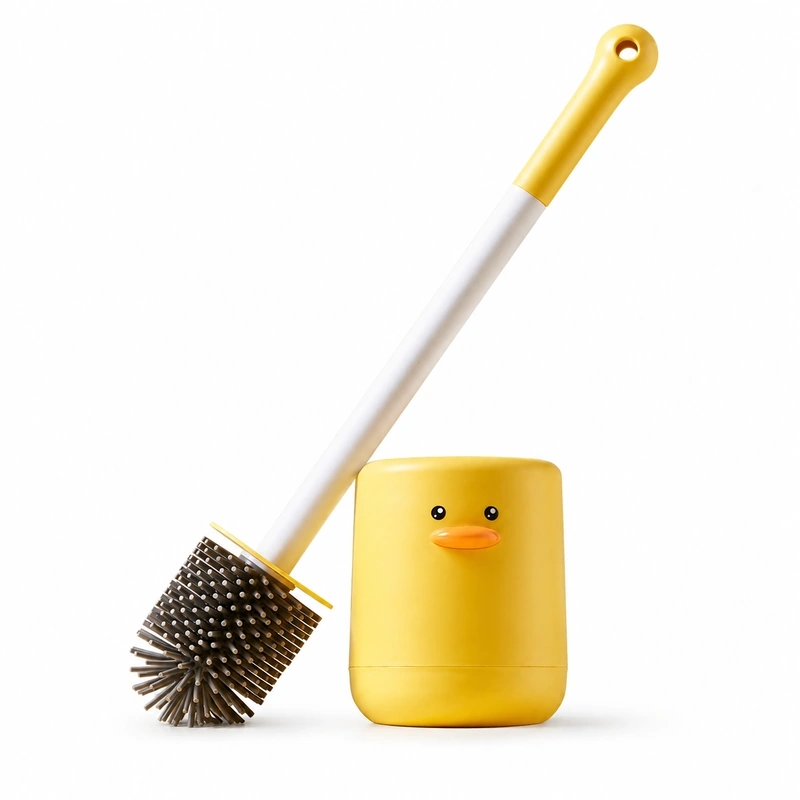
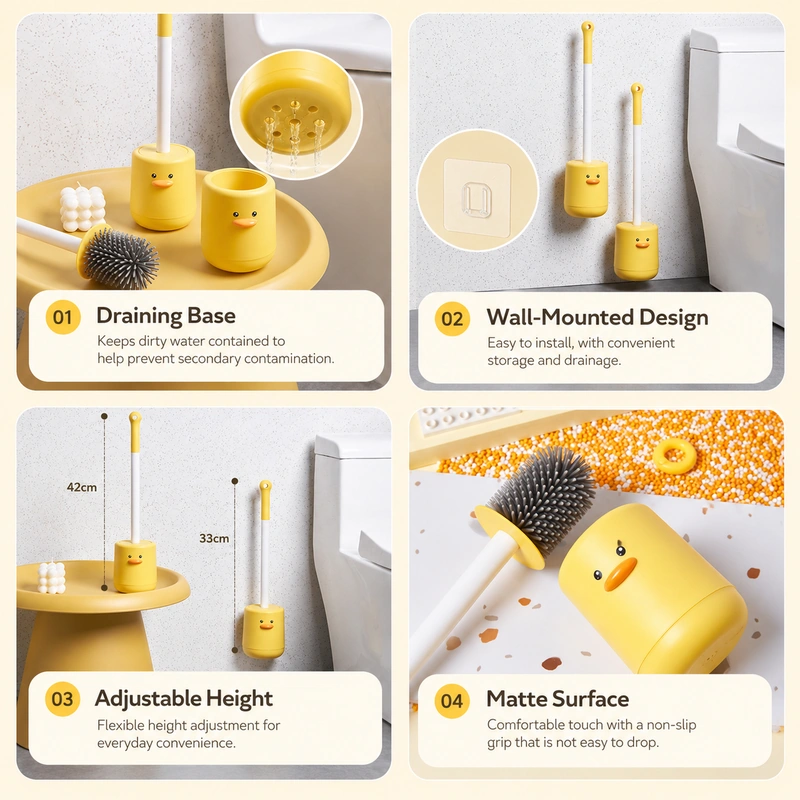
The Yellow Duck Toilet Brush is a functional toilet brush with a holder. It uses a PP holder and handle with a TPR brush head. Nylon bristles can also be discussed for custom orders.
The approximate size is 10 × 10 × 51 cm / 3.94 × 3.94 × 20.08 in.
Its duck-shaped holder changes the appearance, but the product remains bathroom cleaning equipment.
This approach may fit family-oriented household collections, bathroom accessory ranges, gift and novelty homeware, supermarket household sections and private-label character programs.
The package and product description should identify it clearly as a toilet brush. Character styling is part of the retail identity, while the cleaning function defines the category.
5. Different Sales Channels Need Different Design Priorities
The right balance between neutral styling and character design changes by sales channel.
Montessori and Preschool Suppliers
These buyers often look closely at manageable dimensions, practical use and a structure that children can understand. Character styling may fit the range, but it should leave the cleaning task easy to see.
Toy and Gift Retailers
Visual identity carries more weight here. Animal shapes, airplane themes and recognizable characters make it easier to build a children’s display or gift collection.
Supermarkets and Household Stores
Products in these channels often sit between functional homeware and visual merchandising. A character shape may attract attention, but the packaging still needs to explain the actual use.
Online Sellers
Online customers cannot handle the product before ordering. Images therefore need to explain dimensions, working parts, materials, included components, use scenario and cleaning task.
Private-Label Brands
Private-label buyers may want design elements that continue across several SKUs, such as coordinated colors, related character themes, consistent packaging and stable logo placement.
6. Build a Product Family Without Repeating the Same Character
A recognizable range does not require the same animal face on every item. Repeating one character across unrelated cleaning tools can make the assortment feel imposed rather than designed.
It is often more natural to choose a theme that suits each product.
Animal-Inspired Broom
Character identity can be built around the broom head and handle without changing the sweeping task.
Airplane-Inspired Mop
The movement theme fits naturally with a long handle and floor-cleaning structure.
Duck-Shaped Toilet Brush
A friendly holder gives bathroom homeware a recognizable character while keeping the product category clear.
The products can still belong together through related colors, similar visual softness, rounded forms, consistent graphic language, shared packaging hierarchy and repeated logo placement.
Each SKU then gets a shape that makes sense for its construction while the collection maintains a recognizable brand identity.
This also creates more shelf variety. Products with identical character heads may look like minor variations of one item. Coordinated but different designs read as a broader collection.
7. Kids Cleaning Product Design Should Support Retail Images and Packaging
The physical product is only one part of the development job. Buyers also need to see how the design behaves inside a package and on an ecommerce page.
A character shape may look clear in a white-background photograph but become difficult to recognize inside a narrow retail box. Long-handled brooms and mops add another constraint because their dimensions affect both the retail pack and outer carton.
Before confirming the design, review:
- Visibility of the character inside the package
- Overall product volume
- Whether the handle ships assembled or separated
- Logo position
- Visibility of working components
- Appearance in square ecommerce images
Google Merchant Center also recommends using clear, high-quality product images that accurately show the item and provide a strong view of the actual product. Its image guidance is a useful reference when planning ecommerce photography and image sets.
An online image set should therefore show both appeal and working structure. For a character broom, include the animal face, bristles and dustpan. For a mop, show the themed section together with the part that contacts the floor.
That gives customers a more accurate view of what they are buying and gives B2B buyers better material for product approval.
8. What B2B Buyers Should Confirm for a Private-Label Design Project
Before requesting a quotation, define which parts of the design are fixed and where customization is needed.
- Selected product model
- Intended cleaning task
- Target sales channel
- Preferred colors
- Logo position
- Brand graphics and printed patterns
- Character direction
- Packaging format
- Expected quantity
- Destination market
- Required dimensions
- Structural changes under consideration
MAYEV can discuss logo application, colors, graphics, patterns, cartoon styling, packaging and selected product details according to the model and project.
Some changes work easily on one product and poorly on another. Customization feasibility, MOQ, packaging, production details and lead time should therefore be confirmed against the selected model, quantity and order requirements.
Buyers can explore MAYEV cleaning products before building a product brief, or contact MAYEV to discuss a specific private-label project.
Kids Cleaning Product Design: B2B Sourcing Summary
Kids cleaning product design has to support the real cleaning task and the visual needs of the sales channel. Character shapes can separate similar tools, improve online recognition and connect a private-label product family. The underlying broom, mop or brush still needs to work as intended. Before finalizing the design, confirm the function, construction, channel, graphics, packaging and customization brief.
Frequently Asked Questions About Kids Cleaning Product Design
Does a character shape make a cleaning product a toy?
No. The intended function and use determine the category. A character-shaped broom may be a working sweeping tool, while a duck-shaped toilet brush remains bathroom cleaning equipment.
Why use character designs on kids cleaning products?
Character styling can improve visual recognition, separate similar products and give a retail or private-label range a clearer identity. It should not interfere with the cleaning task.
Are neutral designs better for Montessori suppliers?
That depends on the buyer and range. Some Montessori and preschool suppliers prefer simple styling, while others carry character products. In either case, practical use and manageable proportions should remain clear.
Can one private-label range include several different characters?
Yes. Different characters can still form one product family when the colors, graphics, packaging and brand language are consistent.
Which product details should be checked before adding a character design?
Review handle proportions, working parts, balance, storage, packaging volume and whether the decorative section affects normal use.
Can MAYEV customize character-shaped cleaning products?
Depending on the model and project, MAYEV can discuss logo application, colors, graphics, patterns, cartoon styling and packaging. Final options depend on manufacturing feasibility, quantity and order requirements.
Turn Functional Cleaning Tools Into a Recognizable Product Range
Keep the cleaning task clear, then use shape, color, graphics and packaging to build the right retail position.
Discuss Your Private-Label Project