Planning kids cleaning tools by age starts with a practical question: what task will the child actually do? A young child sweeping crumbs from a small area is not doing the same job as an older child helping with bathroom cleaning.
Both activities may sit within a kids cleaning range, but they should not share identical product descriptions, usage guidance or packaging messages.
For Montessori suppliers, preschool distributors, supermarkets, household retailers and private-label brands, age is only one part of the buying decision. Handle length, product proportions, dry or wet use, adult involvement, retail category and the way the product is shown online all affect how a SKU should be positioned.
HealthyChildren, a resource from the American Academy of Pediatrics, gives examples of household responsibilities that may suit different stages of childhood. These include sweeping floors at around ages 5 to 7 and cleaning bathrooms or scrubbing toilets at around ages 11 to 12.
General chore guidance is useful context for assortment planning, but it is not a product certification. Buyers still need to assess each finished item according to its design, intended use, destination market and applicable requirements.
1. Kids Cleaning Tools by Age Need More Than an Age Label
An age printed on a package tells a buyer very little unless it is tied to a clear cleaning task.
With a broom and dustpan, the job may be limited to moving dry debris, repeating a simple sweeping motion and collecting crumbs or paper scraps. A mop introduces water, a wider movement area, drying and storage. Bathroom cleaning brings hygiene routines, more demanding judgment and the possible presence of household cleaning products.
These are different use conditions, even when the tools share similar colors or child-friendly styling.
It is equally important to keep chore guidance separate from formal product compliance. Guidance that children aged 5 to 7 may help sweep a floor does not establish that every broom is tested, certified or suitable for that group.
In practice, the task usually provides a better starting point than the character on the handle.
2. Early Household Participation Should Keep the Task Simple
Young children often want to copy the routines they see at home. For buyers serving preschool or Montessori channels, the strongest product is not necessarily the set with the most pieces.
A straightforward tool that makes one activity easy to understand can be more useful.
- Sweeping paper scraps from a small dry area
- Carrying a lightweight cleaning item
- Returning a tool to its storage position
- Following one simple household routine
- Understanding what each component does
- Using manageable product proportions
During product review, buyers should handle the sample rather than rely only on dimensions in a specification sheet. Check whether the grip feels proportionate, whether the tool is awkward to turn, how much the complete item weighs and whether each component has an obvious purpose.
3. Sweeping Is a Practical Starting Point for School-Age Kids
HealthyChildren includes sweeping floors among its example chores for children around ages 5 to 7. For B2B buyers, this makes dry sweeping a sensible reference activity when building a functional children’s cleaning range.
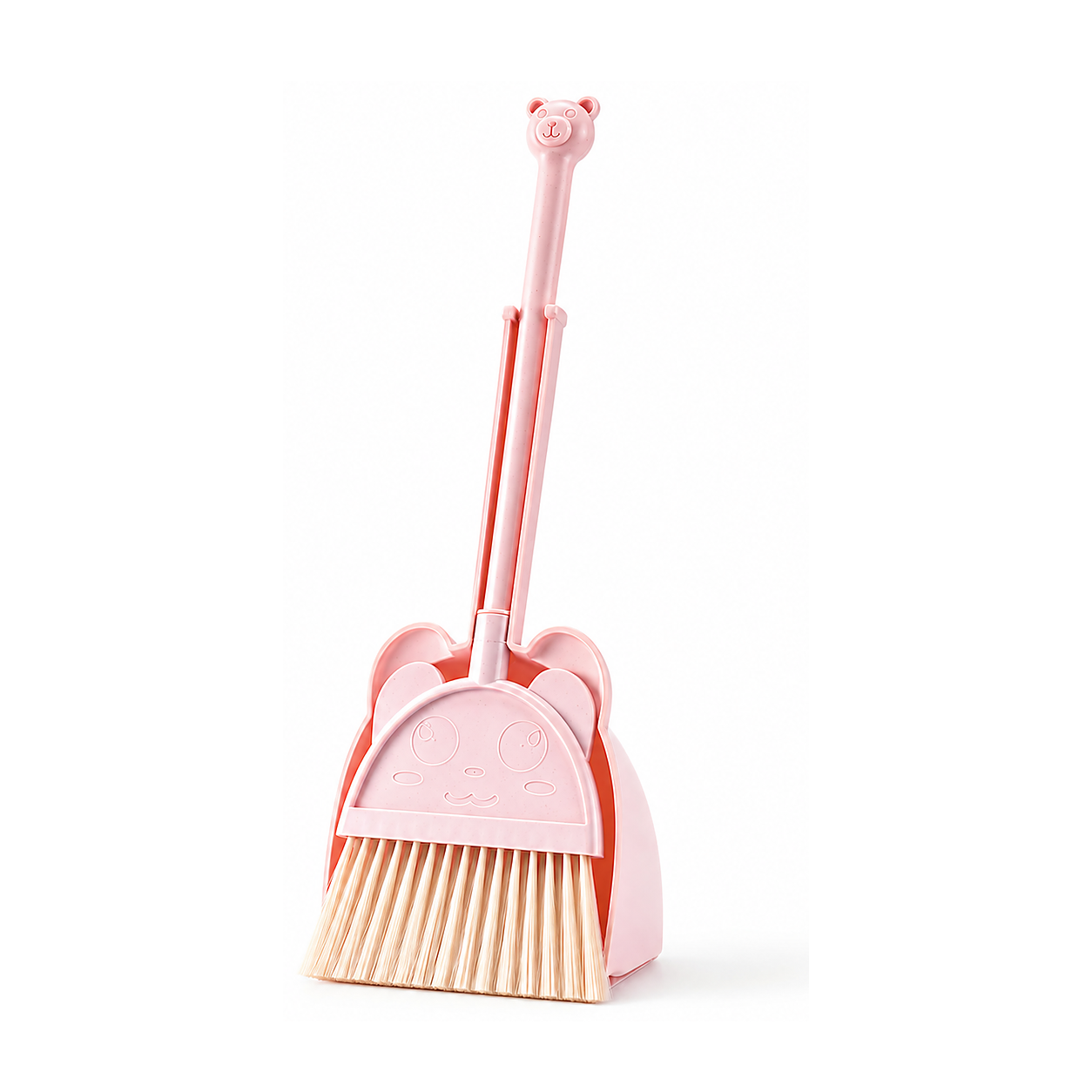
Kids Broom and Dustpan Set
The MAYEV Kids Broom and Dustpan Set is made for actual sweeping rather than display or pretend use alone.
It can collect crumbs, dust, paper scraps and other light household debris.
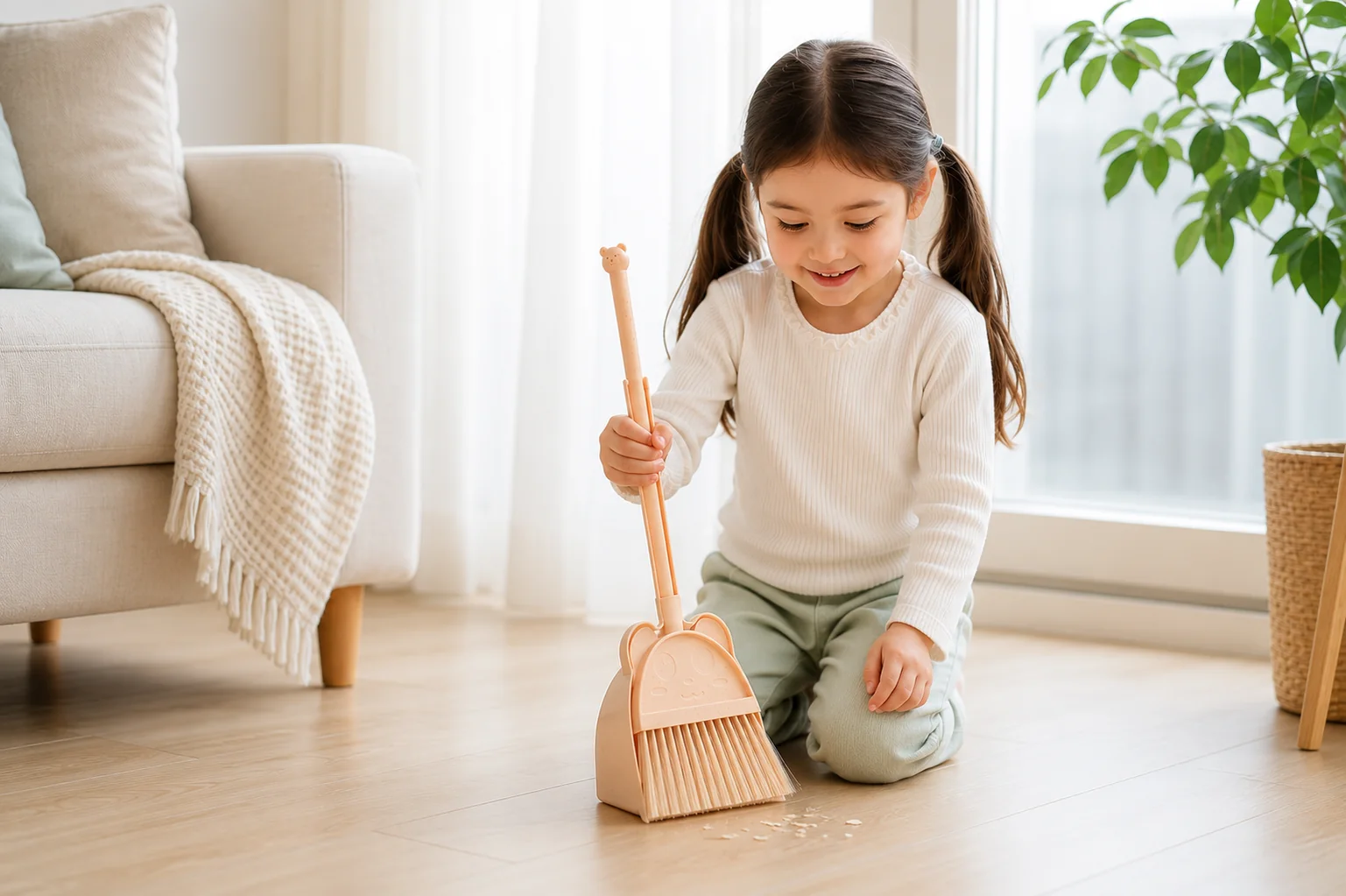
This working function gives the set several possible placements, including Montessori and preschool ranges, household stores, supermarkets, toy and activity retailers, online shops and private-label collections.
4. The Same Age Group Can Still Need Different Retail Designs
Planning kids cleaning tools by age does not require every functional tool to look plain. Two brooms can support the same sweeping task while meeting different merchandising needs.
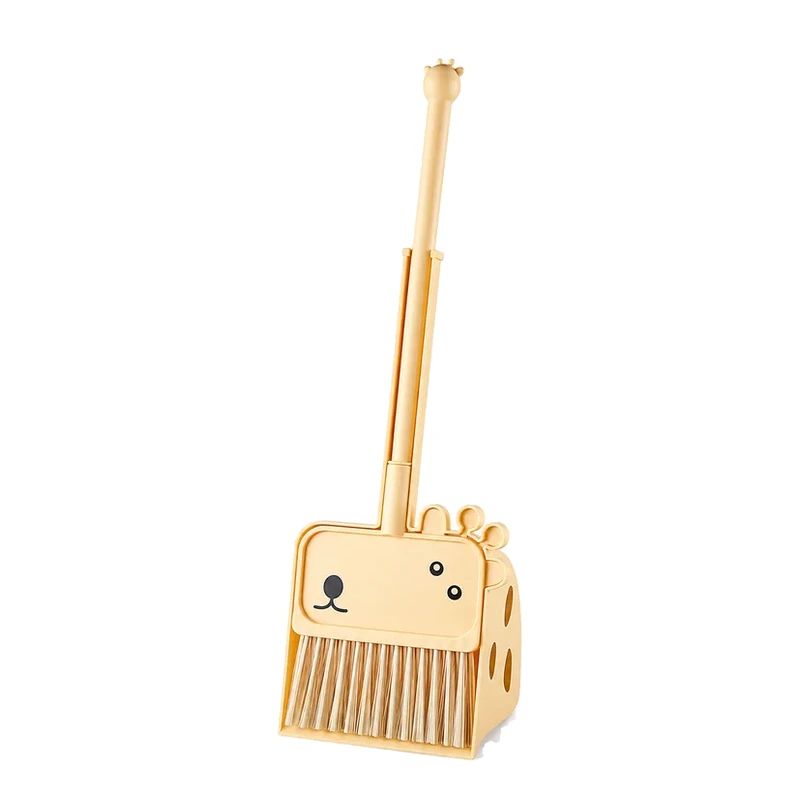
Kids Giraffe Broom
The MAYEV Kids Giraffe Broom measures approximately 11 × 15 × 52 cm / 4.3 × 5.9 × 20.5 in.
Like the standard broom set, it is intended to sweep dust, paper scraps and other light debris.
Its giraffe-inspired shape gives it a more recognizable identity for children’s departments, toy retailers, gift stores, preschool ranges, character-led collections and online marketplaces.
A conventional broom communicates function immediately. The giraffe version brings more visual personality while retaining the same basic job.
5. Wet Cleaning Requires More Control Than Dry Sweeping
A mop is not simply a broom for the next age bracket. Adding water changes how the tool moves, how the floor must be managed and what happens after the task is finished.
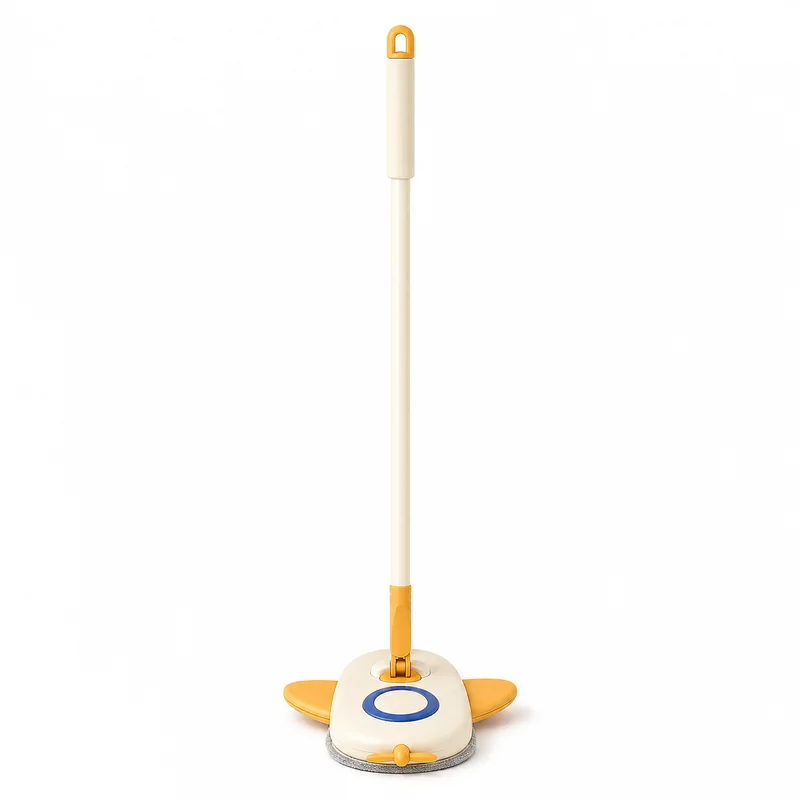
Kids Airplane Mop
The MAYEV Kids Airplane Mop can contact water and is intended for light floor wiping.
Its listed dimensions are approximately 71 × 74 cm / 27.95 × 29.13 in.
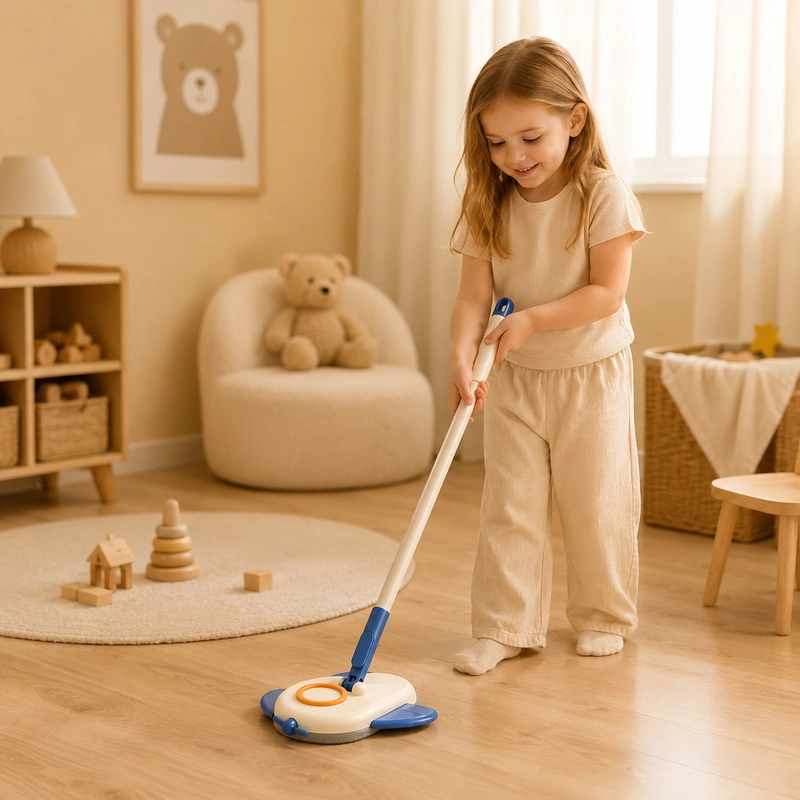
- Handle control
- Direction changes
- Working-head dimensions
- Water contact
- Drying after use
- Wet-floor slipping risk
A wet floor may introduce a slipping risk, so adult guidance is appropriate during this type of activity.
The exact age recommendation should not be inferred from colorful styling. Physical ability, household rules, supervision and the final product configuration all influence suitable use.
6. Bathroom Cleaning Belongs Later in the Household Chore Range
Bathroom work calls for a different level of household responsibility. HealthyChildren includes cleaning bathrooms and scrubbing toilets among its example chores for children around ages 11 to 12.
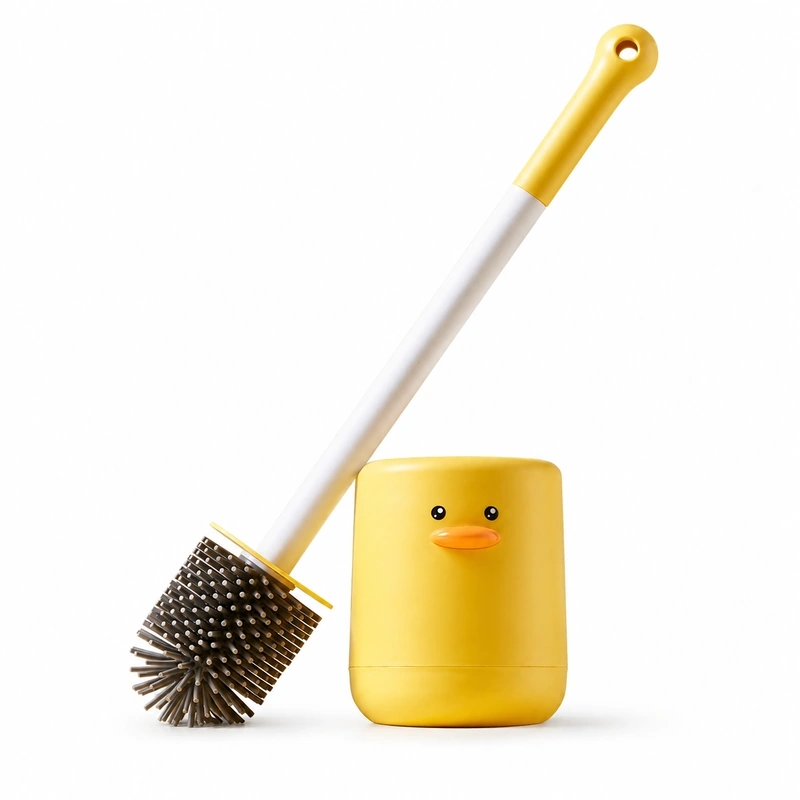
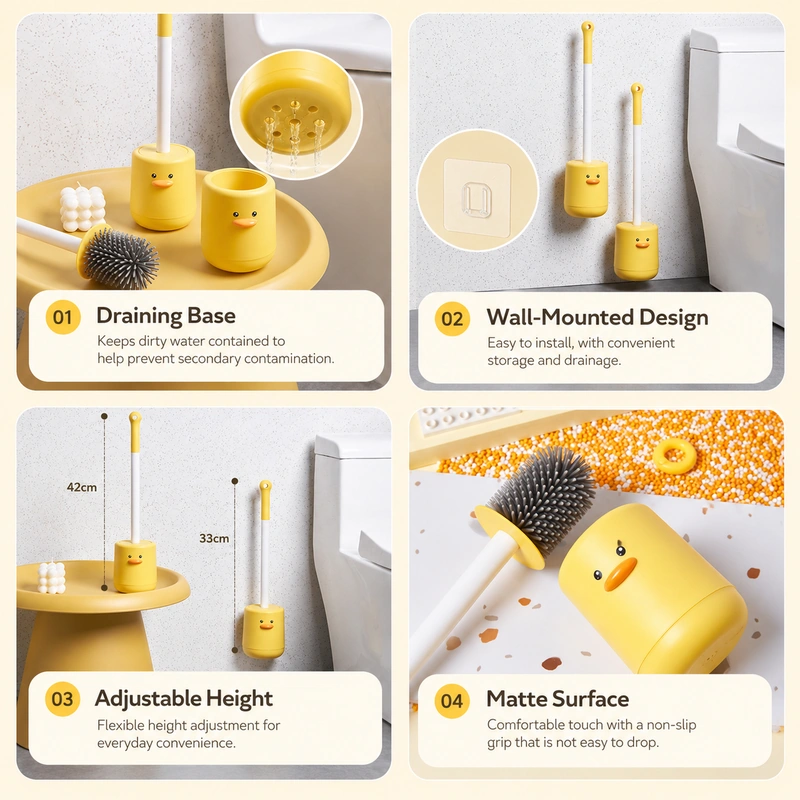
The MAYEV Yellow Duck Toilet Brush is a functional bathroom cleaning tool. Its structure includes a PP holder, PP handle and TPR brush head. Optional nylon bristles can be discussed for custom projects.
The approximate product size is 10 × 10 × 51 cm / 3.94 × 3.94 × 20.08 in.
The yellow duck shape makes the item more approachable for a family-oriented bathroom collection, but it does not change the product’s purpose. Listing copy and packaging should still identify it clearly as a toilet brush.
Buyers also need to distinguish the tool from any chemical used with it. CDC household cleaning guidance advises keeping cleaning and disinfecting products out of children’s reach and following directions on their labels.
7. Build the Range Around Increasing Task Complexity
An age-aware assortment does not need a separate SKU for every birthday. It is usually clearer to group products by the complexity of the cleaning task.
Simple Dry Participation
Lightweight broom, simple dustpan and one easy-to-understand household activity.
Functional Sweeping
Confirm actual sweeping performance, proportions and broom-to-dustpan fit.
Character-Led Cleaning
Add stronger merchandising without weakening the working function.
Wet Cleaning
Review water use, movement, drying, storage and adult guidance.
Advanced Household Chores
Consider hygiene, adult judgment and strict separation from cleaning chemicals.
This structure gives distributors and retailers a logical product progression without forcing an unsupported age label onto every SKU.
8. Age Positioning Changes With the Sales Channel
Montessori and Preschool Suppliers
These buyers are likely to examine proportions, simplicity, storage and whether the tool completes a real task. At the younger end of the range, a clear working structure may be more useful than a large accessory count.
Toy Retailers
Character identity may carry more weight. Role play, household imitation, dimensions and visual styling can help explain the item, while functional claims still need to match the product.
Supermarkets and Household Stores
Some items sit between children’s participation and general household use. Explaining dimensions and the real task may be more useful than imposing a narrow age position.
Online Sellers
Images should show scale, handle length, working parts, dimensions and realistic use. Where adult guidance is relevant, the wording should be easy to find.
9. What B2B Buyers Should Confirm Before Using Age Guidance
Before adding age wording to packaging or a listing, buyers should review the finished product and its use conditions.
- Actual cleaning task
- Functional use, role play or both
- Finished dimensions and weight
- Grip, carrying and control
- Whether water is involved
- Whether cleaning chemicals could be present
- Adult guidance requirements
- Destination market
- Applicable labeling or testing requirements
- Production sample configuration
- Basis for proposed age wording
- Packaging and intended use
This review is particularly important for OEM and private-label projects. A change to the handle, material, accessories, structure, packaging or intended use may affect how the product should be described.
MAYEV can discuss model selection, colors, logo application, patterns, character styling and packaging for the chosen project.
Final age labeling, compliance requirements, MOQ, packaging, customization and production details need to be confirmed for the specific order and destination market.
Buyers can explore MAYEV products or contact MAYEV with a sourcing brief.
Kids Cleaning Tools by Age: B2B Sourcing Summary
Kids cleaning tools by age are easier to plan when the range follows task complexity instead of relying on fixed age labels. Simple dry participation, functional sweeping, wet cleaning and bathroom chores involve different product structures and levels of adult involvement. B2B buyers should review the actual task, dimensions, handling, sales channel, guidance needs and destination-market requirements for each SKU.
Frequently Asked Questions About Kids Cleaning Tools by Age
What cleaning chores are suitable for younger children?
Simple household participation is a sensible starting point. HealthyChildren notes that preschool-age children can begin helping with basic household tasks, and its examples for ages 5 to 7 include sweeping floors. The specific activity should still suit the child, household and tool.
At what age can children sweep the floor?
HealthyChildren lists sweeping floors as an example chore for children around ages 5 to 7. This is general chore guidance and does not certify every broom for that age.
Should a kids broom and kids mop use the same age recommendation?
Not automatically. Sweeping dry debris and wiping a wet floor involve different movement, control and use conditions. Each finished product needs its own assessment and appropriate guidance.
Can older children help clean a bathroom?
HealthyChildren includes scrubbing toilets and cleaning bathrooms among example chores for ages 11 to 12. Household judgment and adult involvement still matter, while cleaning chemicals should be stored and used according to their labels.
Does a cartoon design make a product suitable for younger children?
No. Character styling affects presentation rather than age suitability. Product structure, intended task, final configuration and market requirements matter more.
Can MAYEV develop products for different age-oriented ranges?
MAYEV can discuss product models, colors, graphics, character styling, logo application and packaging for different projects. Age positioning and compliance details need to be confirmed against the actual product and destination market.
Build a Kids Cleaning Range Around the Task
Start with manageable household activities, then introduce wet cleaning and more advanced tools where the product, user and use conditions make sense.
Discuss Your B2B Project